
Views: 0 Author: Site Editor Publish Time: 2026-04-06 Origin: Site


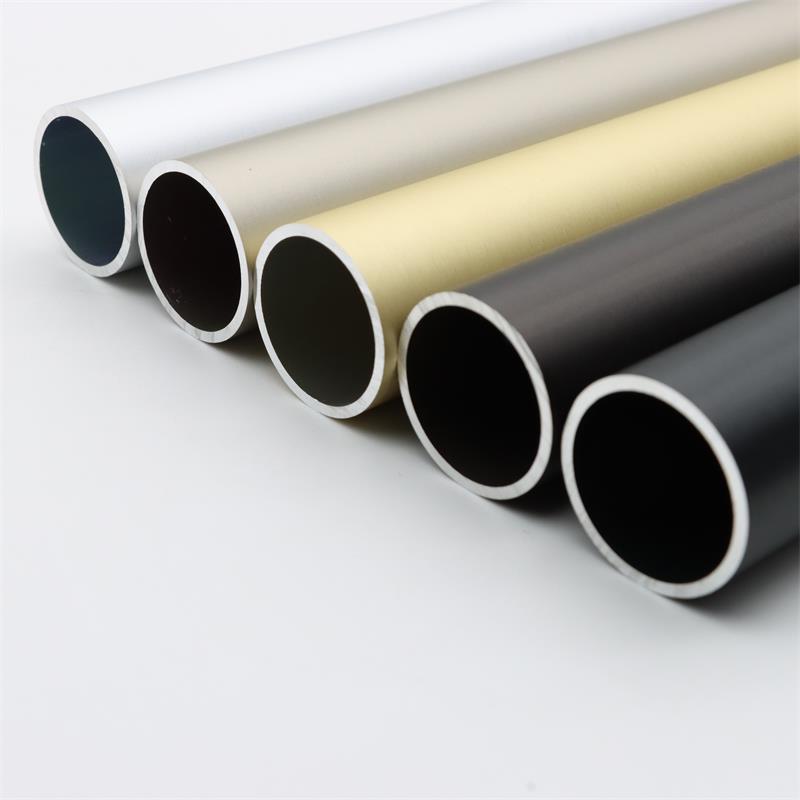
Choosing the best material for a Wardrobe Tube is one of the most important decisions in wardrobe hardware selection. A Wardrobe Tube may appear to be a simple hanging component, but the material directly affects strength, durability, corrosion resistance, appearance, weight, cost, and compatibility with modern closet systems. For buyers, designers, cabinetmakers, and importers, the question is not just which material looks good. The real question is which Wardrobe Tube material performs best under daily use while matching the style and requirements of the wardrobe project.
In today’s market, the most common Wardrobe Tube materials are steel and aluminum. Current product listings from major wardrobe hardware suppliers show exactly that pattern. Häfele lists aluminum and steel wardrobe rod options, including oval rods in the common 30 x 15 mm format, while Richelieu’s current closet rod offering includes steel and aluminum rods in both round and oval formats, plus multiple gauges and finishes.
That matters because modern wardrobes are no longer designed only for basic storage. Current closet-system trends emphasize modular layouts, flexible organization, cleaner aesthetics, and space-efficient storage. As a result, the material used in a Wardrobe Tube now affects both functional performance and product positioning. Retail and trend coverage in 2026 continues to emphasize adaptable closet systems and hardware that combines practicality with a refined look.
A Wardrobe Tube is a structural hanging element. It supports shirts, jackets, dresses, coats, and other garments every day. If the material is poorly chosen, the Wardrobe Tube may sag, dent, corrode, or wear out prematurely. If the material is appropriate, the Wardrobe Tube will remain straight, stable, and visually appealing for years.
Material choice affects the following performance factors:
Load-bearing strength
Resistance to bending
Weight of the rod itself
Surface durability
Corrosion resistance
Finish quality
Manufacturing cost
Installation compatibility
This is why a Wardrobe Tube should be selected like engineered hardware rather than as a decorative afterthought.
The current market shows two dominant materials for Wardrobe Tube products:
Steel
Aluminum
Other options may appear in niche applications, but steel and aluminum are the most commercially relevant materials in wardrobe hardware catalogs today. Richelieu’s closet rod listings show steel round rods, steel oval rods, round aluminum rods, capped aluminum rods, and aluminum oval formats. Häfele likewise lists both steel and aluminum wardrobe rods.
For most heavy-duty applications, steel is the best material for a Wardrobe Tube. Steel offers high strength, good rigidity, strong resistance to deformation, and reliable long-term performance under heavier garment loads. If the wardrobe is intended to hold coats, uniforms, dense hanging garments, or high daily traffic, a steel Wardrobe Tube is usually the safest recommendation.
Current product data supports that conclusion. Richelieu’s catalog shows steel round closet rods in multiple gauges, including 18-gauge examples at 1.2 mm thickness and steel oval closet rods at 1.0 mm thickness. Häfele also lists welded steel oval rods at 1.0 mm thickness in the 30 x 15 mm format. These listings show that steel Wardrobe Tube products are engineered specifically for structural performance in wardrobe systems.
High load capacity
Better rigidity for long spans
Good resistance to bending
Strong suitability for commercial or high-use wardrobes
Widely available in many diameters, gauges, and finishes
Heavier than aluminum
Can corrode if finish quality is poor or if the environment is humid
May cost more in some premium finish programs
For projects where durability is the main buying driver, steel remains one of the best materials for a Wardrobe Tube.
Aluminum is another excellent material for a Wardrobe Tube, especially in contemporary wardrobes where lighter weight, corrosion resistance, and clean aesthetics are important. Aluminum Wardrobe Tube products are widely used in modular and premium wardrobe systems because they combine a refined appearance with adequate strength for many residential applications.
Häfele’s current aluminum oval closet rod listing shows a 30 x 15 x 1.3 mm profile, while Richelieu’s catalog includes round aluminum rods in 1-5/16 inch sizes and also lists aluminum oval closet rods in the 30 x 15 mm format with 1.5 mm thickness. That indicates aluminum is not a niche alternative. It is a mainstream material in current wardrobe hardware systems.
Lightweight and easy to handle
Good corrosion resistance
Clean appearance for modern interiors
Available in many finishes
Suitable for modular wardrobe systems
Generally less rigid than steel at the same dimensions
May require careful span planning
Not always the first choice for the heaviest loads
If the project is a residential wardrobe with normal hanging loads and a modern design language, aluminum can be one of the best materials for a Wardrobe Tube.
Material selection should not be separated from profile selection. Buyers often compare Round Wardrobe Tube and Oval Wardrobe Tube designs at the same time they compare materials.
A Round Wardrobe Tube is a traditional format. It is common in standard closets, retrofit jobs, and more economical wardrobe systems. Richelieu’s current assortment shows Round Wardrobe Tube products in both steel and aluminum, with multiple diameters and gauges available.
An Oval Wardrobe Tube is especially common in contemporary wardrobes because it gives a cleaner, flatter appearance and typically reduces rod rotation. Current Häfele and Richelieu listings show that the 30 x 15 mm Oval Wardrobe Tube format is one of the most established specifications in the market today.
Type | Common materials | Best for |
|---|---|---|
Round Wardrobe Tube | Steel, aluminum | Standard closets, retrofit jobs, broad compatibility |
Oval Wardrobe Tube | Steel, aluminum | Premium wardrobes, modern interiors, modular systems |
A steel Round Wardrobe Tube is often best for durability-focused installations.
An aluminum Oval Wardrobe Tube is often best for design-led modern wardrobes.
A steel Oval Wardrobe Tube is a strong compromise for buyers who want both premium appearance and stronger structural performance.
The table below summarizes the most important material differences for a Wardrobe Tube.
Factor | Steel Wardrobe Tube | Aluminum Wardrobe Tube |
|---|---|---|
Strength | Higher | Moderate to good |
Weight | Heavier | Lighter |
Corrosion resistance | Good with finish protection | Naturally better |
Rigidity | Better for long spans | Good but lower than steel |
Appearance | Strong, technical, versatile | Clean, modern, premium |
Best use case | Heavy-duty wardrobes | Contemporary residential systems |
Market availability | Very broad | Very broad |
This is why there is no single universal answer. The best material for a Wardrobe Tube depends on the use case. Steel is usually best when performance is the priority. Aluminum is often best when aesthetics, lightness, and corrosion resistance matter more.
The best material for a Wardrobe Tube is also influenced by market direction. In 2026, closet-system coverage continues to emphasize flexibility, customization, and efficient use of space. Trend reporting on wardrobe hardware likewise highlights clean aesthetics, better user experience, and more practical fittings.
That trend has two direct implications:
Aluminum is gaining visibility because it fits modern, lightweight, premium-looking wardrobe systems.
Steel remains essential because durability and structural reliability still matter in real daily use.
So the best Wardrobe Tube material today is not determined only by engineering. It is determined by the balance between performance and design.
Steel is usually the best material for a Wardrobe Tube that will hold coats, jackets, or dense hanging garments.
Aluminum is often the best material for a Wardrobe Tube in a design-conscious modular wardrobe, especially when paired with an Oval Wardrobe Tube profile.
Aluminum generally performs very well because of its corrosion resistance, although coated steel can also work well when properly finished.
Steel is often the best material for a Wardrobe Tube when cost-to-strength ratio is the main priority.
Aluminum often performs well in this category because it is widely available in refined finishes and sleek profile designs, especially in Oval Wardrobe Tube applications.
Many buyers make material decisions too quickly. Common mistakes include:
Choosing a Wardrobe Tube only by finish color
Ignoring load requirements
Using aluminum where a heavier steel Wardrobe Tube would be safer
Choosing steel without considering corrosion exposure
Forgetting that Round Wardrobe Tube and Oval Wardrobe Tube fittings are not always interchangeable
Assuming all rods with the same outer size have the same wall thickness
Current Richelieu listings show clearly that thickness and gauge vary across products, which means material choice should always be reviewed together with profile size and wall thickness.
Before selecting a Wardrobe Tube, confirm these points:
What garments will it support?
How long is the rod span?
Do you need a Round Wardrobe Tube or Oval Wardrobe Tube?
Is the installation environment dry or humid?
Is modern appearance a priority?
Is weight reduction important?
What thickness or gauge is listed?
Are matching supports available?
This checklist usually leads to the correct material decision faster than comparing finishes alone.
The best material for a Wardrobe Tube depends on the application. Steel is generally best for heavy-duty strength and rigidity, while aluminum is often best for lightweight, corrosion-resistant, and modern wardrobe designs. Current Häfele and Richelieu listings show both materials widely used across the market.
Steel is better when maximum strength and long-span performance are needed. Aluminum is better when lower weight, corrosion resistance, and sleek appearance are more important. Both are mainstream materials in current wardrobe hardware catalogs.
Not universally. A Round Wardrobe Tube is highly practical and broadly compatible, while an Oval Wardrobe Tube is often preferred for modern wardrobes and reduced rotation. The best choice depends on the wardrobe system and design target.
Yes, for many residential uses. Current market listings show aluminum Wardrobe Tube products in both round and oval formats, including 30 x 15 x 1.3 mm oval rods from Häfele and aluminum oval rods at 1.5 mm thickness in Richelieu’s catalog. That indicates aluminum is widely accepted for wardrobe applications.
Both steel and aluminum are common. A steel Oval Wardrobe Tube is often better for heavier loads, while an aluminum Oval Wardrobe Tube is attractive for modern residential wardrobes where design and corrosion resistance are priorities.
The best material for a Wardrobe Tube depends on what the wardrobe needs to do. If the project demands maximum strength, long-term rigidity, and heavier load support, steel is usually the best material for a Wardrobe Tube. If the goal is a lightweight, corrosion-resistant, visually refined solution for a modern modular wardrobe, aluminum is often the best material for a Wardrobe Tube.


