
Views: 0 Author: Site Editor Publish Time: 2025-08-29 Origin: Site


When you use an adjustable wardrobe bracket, you gain the flexibility to elevate your closet and change the layout as your needs shift. This feature can improve organization for different types of clothing. However, you might notice some drawbacks. A wardrobe bracket may not provide the same stability as fixed options, especially if you store heavy items. Think about whether you value flexibility or need a stronger support system for your closet.
Adjustable wardrobe brackets let you change your closet layout easily to fit different clothing sizes and storage needs.
These brackets help you use space better by allowing shelves and rods to move up or down, making your closet more organized.
Installing adjustable brackets is simple with basic tools, but you must measure carefully and secure them to wall studs for stability.
Adjustable brackets may not hold as much weight as fixed ones, so choose strong brackets and rods if you store heavy clothes.
Regular maintenance like tightening screws and cleaning helps keep your adjustable wardrobe system safe and long-lasting.
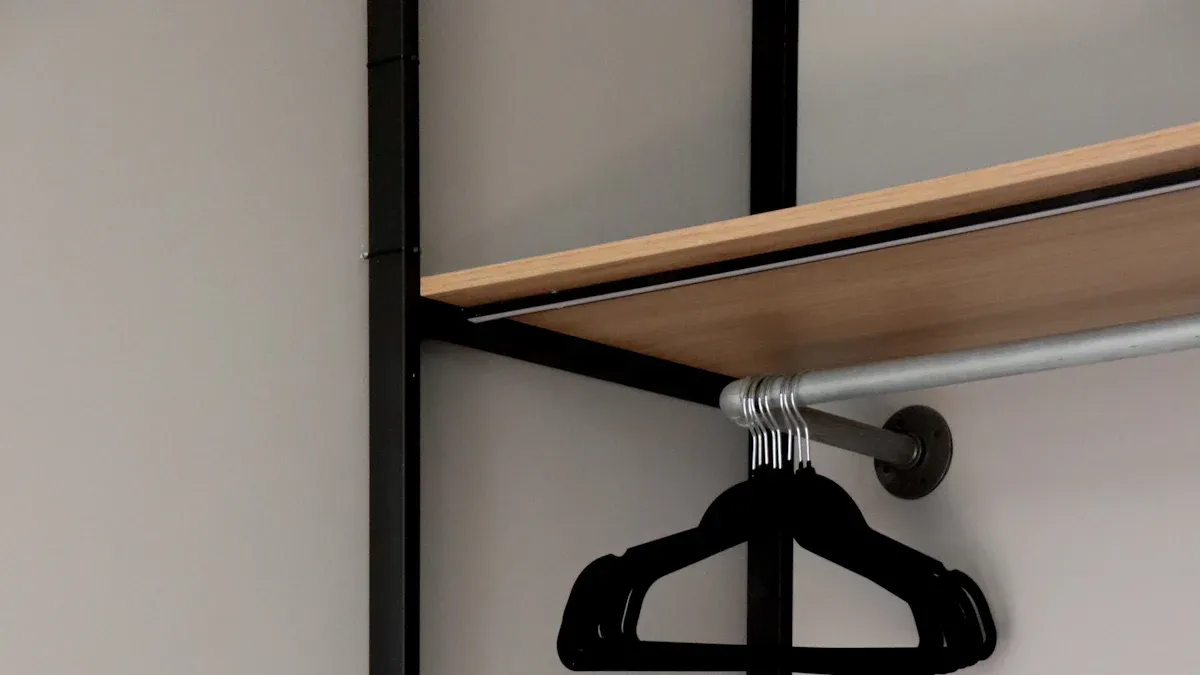
A wardrobe bracket helps you support closet rods and organize your clothes. You use it to hold up rods that carry shirts, pants, or jackets. The main function of a wardrobe bracket is to keep your closet rods stable and secure. You can find different types, such as end brackets, center brackets, and sockets, each with a specific function in your closet system.
When you want to change your closet layout, adjustable closet rods give you more options. You can move them up or down to fit longer coats or shorter shirts. Pulldown closet rods also add convenience. You pull them down to reach items stored higher up, making your closet more accessible. This function is helpful if you have a tall wardrobe or want to use every inch of space.
Tip: Think about what you need most—easy access, more space, or a flexible setup. The right wardrobe bracket and rod combination can help you reach your goals.
Adjustable closet rods stand out because they let you change the length and height without much effort. You do not need special tools for most models. Many use a telescoping metal design, so you can slide them to the size you want. Pulldown closet rods work well with adjustable closet rods, especially if you want to reach high shelves.
Here is how adjustable closet rods compare to fixed rods:
Aspect | Adjustable Closet Rods | Fixed Closet Rods |
|---|---|---|
Design | Telescoping design allows easy length adjustment without cutting | Fixed length, requires precise measurement and cutting to fit closet width |
Installation | Often includes mounting hardware; simpler and quicker to install | Requires measuring, marking, selecting hardware, mounting sturdy brackets (preferably into studs), more involved installation |
Flexibility | Highly adjustable to fit various closet sizes and changing storage needs | No adjustability; fixed length may leave unused vertical space |
Weight Capacity | May have limitations; generally supports lighter loads compared to fixed rods | Higher weight capacity; sturdy and durable, suitable for heavy garments |
Cost | Generally more expensive | More affordable |
Use Case | Ideal for non-standard or changing closet sizes; easy customization | Best for stable, long-term installations requiring strength and durability |
Adjustable closet rods offer flexibility for changing storage needs.
Pulldown closet rods make high spaces easier to use.
Fixed rods provide strong support for heavy items but do not adjust.
You should choose adjustable closet rods if you want to change your closet often or need to fit different clothing sizes. Pulldown closet rods help you reach items without a step stool. If you need to store heavy coats or suits, a fixed rod with a sturdy wardrobe bracket may work better.

You can transform your closet with adjustable wardrobe brackets. These brackets let you change the height and length of closet rods, so you can store everything from long dresses to short jackets. You do not have to settle for a one-size-fits-all solution. Instead, you can create flexible storage that adapts to your changing wardrobe. This flexibility helps you keep your closet neat and makes it easier to find what you need.
Tip: If you often switch out seasonal clothing or add new items, adjustable brackets make it simple to rearrange your closet without hassle.
Adjustable wardrobe brackets offer true customizability. You can extend closet rods from 18 inches to 120 inches, which means you can fit almost any clothing size or type. This feature supports custom closet organization by letting you design a layout that matches your personal style and storage needs. You can add more rods for shirts or lower a rod for long coats. The ability to adjust your setup gives you control over your closet’s look and function.
You can maximize every inch of your closet with adjustable brackets. These systems help you use vertical space that often goes to waste. You can add extra shelves or rods at different heights, which leads to better space efficiency. Many systems, like freedomRail, let you move shelves and rods up or down as your storage needs change. This adaptability supports enhanced organization capabilities and helps you avoid clutter. You can also tweak your closet for each season, making it easy to keep things organized all year.
Adjustable brackets support:
Moving shelves to any height, width, or length
Expanding storage for more clothes, bags, or accessories
Easy reconfiguration without major work
Neat appearance with bracket covers
Seamless access to all your clothes
You do not need to be a professional to install adjustable wardrobe brackets. Most systems use vertical rails and brackets that you can attach with basic tools. You can set up or move shelves and rods without making permanent changes to your walls. This easy installation process saves you time and effort. You can elevate your closet quickly and start enjoying better organization right away. If you want a space-saving solution that grows with your needs, adjustable brackets are a smart choice.
Note: Many adjustable systems let you make changes without removing the whole setup. This feature makes it easy to keep your closet organized as your needs evolve.
When you choose adjustable wardrobe brackets, you gain benefits and advantages like flexible storage, customizability, space-saving solutions, and easy installation. These features help you achieve better organization and make your closet work for you.
When you consider adjustable closet systems, you need to weigh the drawbacks before making a decision. Adjustable brackets offer flexibility, but they also come with some challenges that can affect your closet’s performance and longevity.
You may notice that adjustable brackets sometimes feel less stable than fixed options. If you do not install them correctly, the rods can wobble or sag, especially when you hang heavy clothes. Proper measurement and alignment are essential. If you miss a stud or use weak anchors, the entire system can shift over time. Steel and aluminum are common materials for adjustable brackets. These metals provide strength and durability, but even the most durable option can fail if you do not secure it well. Always check that your wardrobe bracket sits flush against the wall and that you use the right hardware for your wall type.
Tip: Use a level and a stud finder to make sure your brackets line up and attach to solid support. This step helps prevent future problems with stability.
You need to think about how much weight your closet rods will hold. Fixed closet rods usually support between 50 and 100 pounds, depending on the material. Metal rods, like chrome or stainless steel, handle heavier loads than wooden ones. Adjustable closet rods use strong steel and a telescoping design, which makes them versatile for many closet sizes. However, manufacturers often do not list a specific weight limit for adjustable rods. In shelving systems, adjustable hardware can sometimes support more weight than fixed mounts, but this does not always apply to wardrobe rods. If you plan to store heavy coats or suits, you should check the product details and avoid overloading the rods.
Setting up adjustable brackets can be tricky. You may need to find wall studs or add support boards, which adds time and effort to the project. If you skip this step, the brackets may not hold up under daily use. Accurate measurement is key. If you misalign the brackets, the rods may tilt or fall. Some users find the assembly process confusing, especially if the instructions are unclear. You might need extra tools or help from another person to get everything level and secure.
Common installation challenges include:
Locating wall studs for secure mounting
Measuring and marking bracket positions accurately
Using the correct screws and anchors for your wall type
Adjusting for uneven walls or tight spaces
Note: Take your time during installation. Double-check your measurements and hardware before hanging clothes.
Adjustable wardrobe brackets require regular care to stay in good shape. You should clean surfaces and shelves often to prevent dust buildup. Make sure air circulates inside the closet to avoid moisture and mold. Do not overcrowd the rods or shelves, as this can strain the hardware and reduce airflow. Lubricate moving parts, such as hinges, with a furniture hardware-specific lubricant. Avoid silicone-based products, which attract dust. Tighten screws on brackets and hinges to keep them from loosening over time. If you notice any wobbling or sagging, address it right away.
Maintenance tips for adjustable brackets:
Wipe down surfaces and dust shelves regularly
Keep clothes dry and use dehumidifiers if needed
Declutter often to maintain airflow and prevent damage
Use quality hangers to reduce stress on rods and brackets
Seek professional help if you are unsure about repairs or adjustments
You can extend the life of your closet system by following these simple steps. Regular maintenance helps you avoid many of the common drawbacks and keeps your storage safe and organized.
You should start by measuring your closet and understanding its layout. The size and shape of your closet will guide your choice of wardrobe bracket. Walk-in closets often have deeper and wider shelves, so you need stronger, longer-span brackets to support heavier loads. Reach-in closets have shallower and narrower shelves, which means you need compact brackets placed closer together for stability. The table below shows how closet type affects your bracket selection:
Closet Type | Shelf Depth | Shelf Width | Shelf Height | Bracket Implications |
|---|---|---|---|---|
Walk-In Closet | 16-24 in | Wide | Adjustable | Stronger, longer-span brackets for heavy loads and wide shelves |
Reach-In Closet | 12-14 in | Narrow | Adjustable | Compact, closely spaced brackets for short, shallow shelves and space optimization |
You can use adjustable shelving systems to fit unique closet layouts. Sturdy materials like metal or wood allow for longer shelf spans with fewer brackets. If your closet has an unusual shape, custom bracket placement helps you use every inch efficiently.
Think about what you plan to store. Lighter items like shirts or accessories work well with regular-duty wardrobe brackets. Heavy coats, shoes, or storage boxes need heavy-duty or even super-duty brackets. The chart below compares different bracket series by their load capacity:
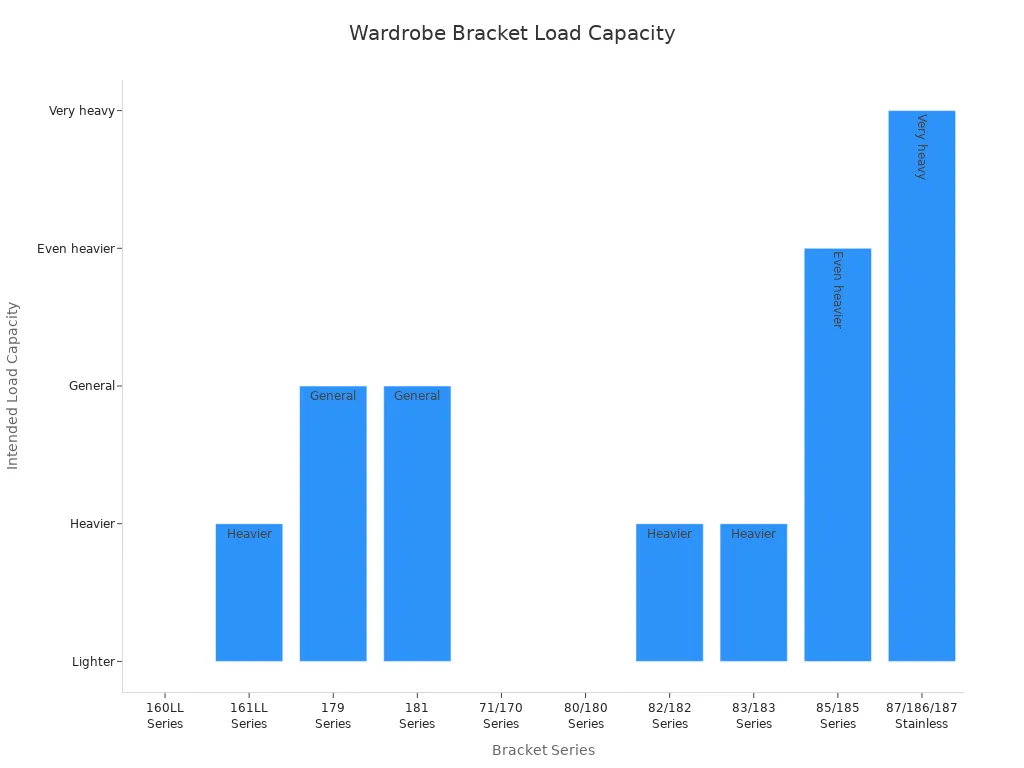
You can find wardrobe brackets designed for specific needs. For example, the 160LL Series suits lighter loads, while the 87/186/187 Stainless Steel Series supports very heavy items. Choose the right bracket to prevent sagging and keep your closet safe.
Consider how often you want to change your closet setup. If you like to rearrange your clothes or add new items each season, look for adjustable wardrobe brackets that make changes easy. Some systems let you move rods and shelves without tools. If you rarely change your closet, fixed brackets may offer more stability.
Tip: Adjustable brackets help you stay flexible and support better organization as your needs change.
Set your budget before you shop. Adjustable wardrobe brackets come in a range of prices. Heavy-duty and stainless steel options cost more but last longer. Think about the look you want, especially if you are creating a contemporary closet space. Some brackets have a sleek design that matches modern decor. Others offer covers or finishes to blend with your closet style.
You should balance cost, durability, and appearance. Choose brackets that fit your needs and help you achieve the closet you want.
Before you install any wardrobe bracket, you should take time to plan your closet. Start by measuring the height, width, and depth of your closet. Use a measuring tape to get accurate numbers. Divide your closet into zones for shirts, pants, dresses, and accessories. This step helps you decide where to place each wardrobe bracket, including the wardrobe end bracket and wardrobe centre bracket.
Next, look at what you want to store. Sort your clothes by type and size. Remove items you no longer wear. Think about seasonal changes and how often you use each item. Plan for future purchases by leaving extra space. When you choose adjustable rods, measure the closet width and leave room at each end for hangers to move smoothly. Select wardrobe sockets that fit your chosen rods and match your closet’s style.
Tip: Visit a store to see sample layouts and get ideas for your own closet. Try to customize your hanging space by installing rods at different heights for short and long items.
Proper installation keeps your wardrobe bracket system safe and stable. Always check the weight capacity of each wardrobe bracket, wardrobe end bracket, and wardrobe centre bracket. Choose sturdy materials that match your storage needs. Use a stud finder to locate wall studs for secure mounting. If you cannot find a stud, use strong wall anchors like toggle bolts or molly bolts.
Gather the right tools before you start. You will need a power drill, drill bits, a level, a screwdriver, and safety goggles. Mark the stud locations and bracket positions with a pencil. Make sure the floor is level and the walls are solid. Use anti-tip kits to anchor the system and prevent accidents.
Common mistakes include skipping wall anchors, overloading shelves, and rushing through assembly. Take your time and follow the instructions. Double-check that each wardrobe socket and bracket is level and tightly fastened.
Questions to Ask Before Buying Adjustable Wardrobe Brackets:
What are the exact dimensions of my closet?
Which types of wardrobe bracket (end, centre, socket) do I need for my layout?
How much weight will each rod and shelf support?
Do I have the right tools and hardware for safe installation?
Will I need to adjust the setup often for seasonal changes?
Note: Careful planning and correct installation help you get the most from your wardrobe bracket system and keep your closet organized for years.
When you choose a wardrobe bracket system, you gain flexibility and customization for your closet. Adjustable brackets let you reposition shelves and rods, making it easy to fit your wardrobe end bracket, wardrobe centre bracket, and wardrobe socket to your needs. You should consider price, stability, style, and installation before deciding. The table below highlights key factors:
Factor | Benefit of Adjustable Brackets | Drawback or Consideration |
|---|---|---|
Price | Better value and durability | Higher upfront cost |
Adjustability | Easy to customize layout | Fixed systems lack flexibility |
Stability | Reliable and safe | Cheap systems may need repairs |
Style and Aesthetics | Polished look, matches decor | Wire systems less appealing |
Impact on Clothing | Protects clothes from marks | Wire shelves may damage clothes |
Additional Features | Includes drawers and baskets | Fixed systems lack extras |
Installation | Durable with professional setup | DIY may require extra effort |
Tip: Weigh flexibility against installation complexity and stability. Choose the wardrobe bracket system that fits your closet size, style, and daily routine.
A wardrobe bracket supports your closet rods and shelves. You need a wardrobe bracket to keep your closet organized and stable. It helps you adjust your storage space for different clothing types and sizes.
You use a wardrobe end bracket at the ends of your closet rods. A wardrobe centre bracket supports the rod in the middle for longer spans. Choose based on your closet’s width and the weight you plan to store.
Yes, you can install a wardrobe socket with basic tools. Measure carefully and use the right screws for your wall type. Always check that the wardrobe bracket and socket feel secure before hanging clothes.
Tighten all screws and check for wall stud support. If your wardrobe bracket still feels loose, add stronger anchors or support boards. Replace any damaged wardrobe end bracket, wardrobe centre bracket, or wardrobe socket for safety.
Most wardrobe brackets support 50 to 100 pounds. Heavy-duty options hold more. Always check the product details. Use a wardrobe centre bracket for extra support if you store heavy coats or bags.


