
Views: 0 Author: Site Editor Publish Time: 2026-02-25 Origin: Site


A “strong” bracket isn’t just thicker metal—it’s the right combination of support points, substrate fixing, and finish. Many installations fail not because the rail is weak, but because the Wardrobe Bracket configuration was chosen without considering real load conditions, span length, wall type, and long-term wear. Sagging is rarely sudden; it is progressive. It begins as a barely visible curve and ends as structural instability. Preventing that progression requires understanding how support systems truly work and selecting components that match your specific environment rather than relying on assumptions.
Rothley designs and manufactures wardrobe support hardware with this structural thinking in mind. With trading roots dating back to 1826 and a modern Anglo-Sino structure that combines British design insight with Chinese manufacturing precision, Rothley develops bracket systems in multiple diameters and finishes to meet contemporary performance and aesthetic demands. Choosing the correct bracket is not about finding the “strongest” piece of metal—it is about building a balanced system that distributes force correctly from the start.
The first mistake people make when choosing a bracket is evaluating closet width rather than clothing weight. Structural stress originates from load, not visual space.
A rail holding lightweight shirts exerts far less stress than one supporting winter coats, denim jackets, uniforms, or layered garments. The density of fabric and weight of hangers add up quickly.
Consider the difference:
A row of cotton shirts may generate moderate load.
A fully packed rail of winter coats can multiply that weight significantly.
Retail rails that are constantly replenished experience dynamic loading beyond static weight.
Load intensity determines how much reinforcement is necessary. Even if the opening is relatively narrow, heavy garments can create mid-span stress that results in sagging over time.
Rothley’s wardrobe bracket range supports a wide selection of rail diameters, allowing installers to match bracket size to expected load conditions. Proper diameter alignment enhances contact stability and reduces rotational movement under weight.
Closets do not operate under steady conditions. Load fluctuates.
Peak load scenarios include:
Seasonal clothing changes.
Laundry temporarily stored on hangers.
Garments grouped closely before organization.
During these moments, stress increases rapidly. If the bracket system was selected only for average weight, sagging may begin during peak conditions.
Designing for maximum expected load rather than average usage significantly improves long-term performance.
Load alone does not determine sagging; span length plays an equally critical role.
The longer the distance between support points, the greater the deflection potential. Even high-quality rails bend under sufficient length without intermediate reinforcement.
Many installers apply practical guidelines such as:
Considering reinforcement when spans approach or exceed approximately 48 inches.
Reducing spacing further under heavy load conditions.
While exact thresholds vary depending on material and load, the principle remains consistent: longer spans amplify bending stress.
Some attempt to prevent sagging by upgrading to a larger diameter rail alone. Although larger rails improve rigidity, they do not eliminate mid-span deflection entirely.
A Wardrobe Centre Bracket fundamentally changes structural dynamics by dividing the span into smaller sections. Instead of one long unsupported length, the rail becomes two shorter spans.
This approach often delivers better results than increasing diameter alone. For example:
A 25mm rail with proper centre reinforcement may outperform a 32mm rail without reinforcement across the same span.
Reinforcement controls structural deflection rather than simply resisting it.
Rothley’s wardrobe centre bracket range integrates seamlessly with end brackets, maintaining consistent design while enhancing performance.
Sagging can originate at the fixing point rather than the rail.
Each mounting surface responds differently to load:
Solid wood panels provide reliable screw retention.
Reinforced plywood offers stable anchoring.
Drywall requires suitable anchors to prevent pull-out.
Masonry demands proper plugs or expansion fixings.
Ignoring substrate compatibility can compromise even the highest quality bracket.
Bracket design influences load distribution. Wider mounting plates distribute force across more surface area, reducing stress concentration.
If anchors are improperly selected:
Screws may loosen gradually.
Brackets may tilt slightly.
Load may shift unevenly.
Rothley’s wardrobe bracket designs are engineered with stable mounting geometry to support secure installation across various substrates.
Selecting the correct fixing method ensures the bracket performs as intended under load.
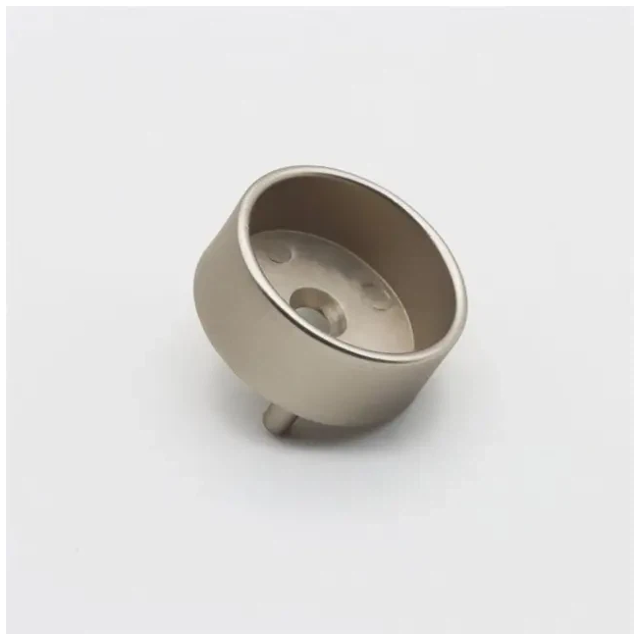
Sag resistance is influenced by material durability over time.
In humid environments such as bathrooms or coastal homes, corrosion resistance becomes critical. Stainless steel provides superior durability in moisture-prone spaces.
Plated finishes may be perfectly suitable for dry bedroom environments while offering aesthetic versatility.
Selecting appropriate material prevents weakening caused by corrosion or finish degradation.
Rothley offers stainless steel and deluxe finish options, allowing customers to choose materials that match environmental conditions and interior design preferences.
Structural hardware should complement surrounding décor.
Whether installed in:
Modern walk-in closets.
Minimalist bedroom wardrobes.
Retail display systems.
Finish consistency enhances perceived quality. Rothley’s design team studies trends across fashion, interior design, and creative industries to ensure bracket finishes align with evolving consumer expectations.
Durability and design are not separate priorities; they work together to create long-term value.
Sag prevention is achieved through coordinated planning rather than isolated hardware choices.
A balanced system typically includes:
Two end brackets as the foundational anchors.
One or more centre brackets for mid-span reinforcement.
Optional wardrobe sockets for controlled alignment and containment.
Each component contributes to structural stability.
End brackets define starting and ending load transfer points. Centre brackets prevent deflection. Sockets improve precision and reduce rotational movement.
If the span is wide or the load heavy, centre reinforcement is not optional—it becomes fundamental.
Ignoring reinforcement often leads to:
Visible sagging within months.
Uneven hanger movement.
Progressive loosening of fixings.
Incorporating reinforcement from the beginning prevents later correction work.
Span | Load Level | Wall/Panel Type | Recommended Bracket Setup | Result You Should Expect |
Short | Light | Solid wood | Two end brackets | Stable performance |
Medium | Light | Solid wood or plywood | Ends + one centre bracket | Improved rigidity |
Medium | Heavy | Drywall with anchors | Ends + centre bracket | Reduced deflection |
Long | Heavy | Reinforced panel or masonry | Ends + multiple centre brackets | Maximum stability |
This matrix demonstrates that sag prevention depends on matching structural setup to real-world conditions.
A rail that remains straight after years of use reflects careful planning at installation stage.
Rothley’s philosophy is rooted in working backward from consumer aspirations. Rather than designing based solely on manufacturing convenience, the company focuses on how products perform in real environments.
Its Anglo-Sino structure merges British design heritage with Chinese manufacturing capability. This collaboration produces wardrobe bracket systems that balance structural reliability, aesthetic integration, and cost efficiency.
Environmental responsibility also guides product development. Durable hardware reduces replacement frequency, minimizing waste and supporting sustainable practices.
Every bracket in the Rothley range is developed with system performance in mind.
Before purchasing, confirm:
Maximum expected garment weight.
Total span measurement.
Mounting surface type.
Environmental conditions.
Need for reinforcement.
Answering these five questions clarifies the correct configuration and reduces installation errors.
Sagging is preventable when decisions are based on structure rather than assumption.
Preventing sagging begins with understanding that a Wardrobe Bracket must match load, span, substrate, and environment as part of a coordinated structural system. Start by evaluating real garment weight, apply span reinforcement principles, choose appropriate materials, and integrate end support with a Wardrobe Centre Bracket when necessary. Rothley offers coordinated bracket solutions in 19mm to 32mm sizes and multiple finishes designed for dependable performance and long-term stability. To build a secure and reliable hanging rail support structure, explore Rothley’s bracket collections and contact us for guidance on the right hanging rail support system for your space.
If the span is wide or the garments are heavy, centre reinforcement significantly improves structural performance and prevents sagging.
Yes. Proper anchoring in suitable substrates is essential for bracket performance. Incorrect fixing can cause early instability.
Stainless steel is recommended in humid environments or where corrosion resistance is important. It also provides long-term durability.
Adding a centre bracket reinforcement and verifying anchor stability can improve existing installations if sagging has begun.


