
Views: 0 Author: Site Editor Publish Time: 2026-02-24 Origin: Site


“If your bracket almost fits, it doesn’t fit—small gaps turn into wobble and early failure.” That single sentence explains why choosing the correct Wardrobe Bracket size is more important than many people realize. A rail system may look secure at first glance, but if the diameter or shape is even slightly mismatched, movement begins immediately. Over time, that movement weakens screws, damages panels, and leads to sagging or detachment. Understanding how to measure properly and match the correct bracket or wardrobe socket to your rail ensures long-term stability rather than short-term compromise.
Rothley manufactures a comprehensive range of wardrobe support hardware designed to eliminate guesswork. With sizes from 19mm to 32mm and multiple finishes available, Rothley provides solutions that align precisely with common rail standards. As a manufacturer with trading roots dating back to 1826 and a modern Anglo-Sino structure that combines British design with Chinese manufacturing capability, Rothley focuses on creating bracket systems that match real-world consumer needs. Getting the size right is the first step toward building a secure hanging rail system.
Choosing the correct size wardrobe bracket begins with two non-negotiable specifications: rail diameter and rail shape.
Most wardrobe rails are round, but oval rails are also common in modern interiors. The difference matters.
Round rails require brackets designed specifically for circular support. Oval rails require brackets engineered for width and height dimensions. Attempting to use a round bracket for an oval rail—or vice versa—results in instability, even if the rail seems to “fit” initially.
Oval rails must be measured in two directions: width and height. The bracket must correspond to both dimensions precisely. Even small misalignment allows rotation or movement.
Rothley designs its wardrobe bracket range to accommodate common rail shapes, ensuring compatibility without forcing installers to improvise.
For round rails, diameter determines compatibility. Common sizes include:
19mm
22mm
25mm
32mm
If your rail measures 25mm, a 22mm bracket will not fit, and a 32mm bracket will leave unwanted space. That gap translates directly into wobble.
Rothley’s wardrobe bracket category pages clearly specify compatible diameters, helping customers avoid mismatched purchases. Selecting the exact diameter ensures that the rail sits firmly inside the bracket or wardrobe socket, minimizing friction and long-term wear.
Accurate measurement eliminates nearly all sizing mistakes. Fortunately, measuring does not require advanced equipment.
A caliper provides the most precise measurement of rail diameter. Simply position the jaws around the outer edge of the rail and read the value.
Precision matters because even a 1mm difference can affect fit. Many rails manufactured in different regions follow metric standards, so measuring in millimeters provides clarity.
If a caliper is unavailable, wrap a flexible measuring tape or string around the rail to measure circumference. Divide that number by 3.14 to calculate diameter.
For example:
Circumference of approximately 78.5mm divided by 3.14 equals roughly 25mm diameter.
Ensure the string is snug but not compressing the surface.
One common mistake is measuring the inside of a hollow rail. Brackets fit around the outside surface, so always measure the outer diameter.
Paint layers or coatings may slightly increase thickness. If the rail has been refinished, measure carefully at multiple points to confirm consistency.
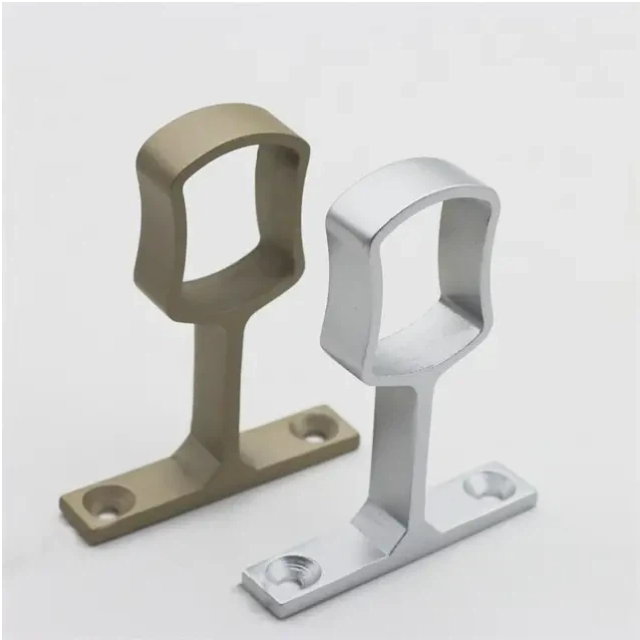
International trade introduces a frequent sizing issue: unit confusion.
A 25mm rail equals approximately 0.98 inches, which is close to 1 inch but not identical. A bracket labeled 1 inch may not match a true 25mm rail perfectly.
Similarly:
19mm is approximately 0.75 inches
22mm is approximately 0.87 inches
32mm is approximately 1.26 inches
Rounding differences can create slight but significant gaps.
When ordering hardware internationally, always confirm whether the bracket size is metric or imperial. Rothley products are clearly defined in metric measurements to avoid ambiguity.
Rail Size (mm) | Approx. Inch | Typical Use | Suggested Support Type |
19mm | 0.75 inch | Light-duty wardrobes | End bracket or wardrobe socket |
22mm | 0.87 inch | Compact interiors | End bracket with optional centre support |
25mm | 0.98 inch | Standard wardrobes | End bracket + centre bracket |
32mm | 1.26 inch | Heavy-duty or retail use | Reinforced end and centre brackets |
Oval (measure width × height) | Varies | Modern decorative rails | Matching oval bracket or socket |
This table simplifies the matching process. Accurate measurement prevents unnecessary returns and installation frustration.
Occasionally, measurement reveals a rail that appears slightly smaller or larger than standard.
Older rails may lose material through wear or gain thickness from paint. If a rail measures slightly under a standard size, choose the closest matching bracket without excessive clearance.
Excessive gap between rail and bracket creates movement. Slight tightness is preferable to looseness, provided installation does not require force that could damage the bracket.
A wardrobe socket often offers slightly greater tolerance compared to some open bracket designs. Because it cups the rail end and may include a retaining screw, it can compensate for minor surface inconsistencies.
Rothley’s wardrobe socket range provides secure anchoring and improved alignment control, making it a practical solution in installations where precision may vary slightly.
Selecting the correct size wardrobe bracket influences more than simple compatibility.
A 32mm rail typically offers greater structural resistance than a 19mm rail. Increased diameter distributes load more effectively and reduces mid-span deflection.
However, diameter alone does not eliminate sagging.
Even a large-diameter rail benefits from centre reinforcement when spans increase. Industry guidance commonly suggests considering centre support when spans approach wider openings, especially under heavier loads.
Rothley’s coordinated end and centre bracket systems allow installers to reinforce longer spans without sacrificing visual consistency.
A correctly sized bracket combined with appropriate support spacing ensures long-term structural performance rather than relying on diameter alone.
When a rail sits firmly within a bracket, the difference is immediately noticeable. Hangers slide smoothly. The rail does not rotate under weight. Screws remain tight.
Precision sizing reflects attention to detail.
Rothley’s design philosophy is rooted in working backward from consumer aspirations. Instead of assuming one-size-fits-all solutions, the company provides clearly defined diameter options and coordinated support systems.
The dual-site Anglo-Sino structure allows Rothley to merge creative British design thinking with efficient Chinese manufacturing resources. This collaboration produces hardware that balances style, durability, and affordability.
Environmental responsibility is also integrated into product development. Durable brackets reduce replacement frequency, minimizing waste and supporting sustainable consumption.
Sizing errors usually result from one of the following:
Estimating diameter by eye.
Confusing inch and millimeter values.
Measuring internal rather than external dimensions.
Ignoring shape differences.
Avoiding these mistakes ensures a secure installation from the beginning.
Matching the correct bracket size eliminates instability before it starts. It prevents the need for temporary fixes such as tape wrapping or improvised shims, which compromise long-term reliability.
Selecting the correct Wardrobe Bracket size follows a clear sequence: measure accurately, confirm rail shape, verify metric dimensions, and then plan your support layout. Precision ensures stability. Rothley offers a complete range of matching brackets and wardrobe socket solutions in 19mm, 22mm, 25mm, and 32mm sizes to help you achieve a secure and professional finish. For detailed specifications and assistance choosing the correct hanging rail support hardware, explore Rothley’s product pages and contact us to discuss your project requirements.
Measure the outer diameter of your rail in millimeters. Match that measurement exactly to the bracket size to ensure a secure fit.
Although close in size, 1 inch and 25mm are not identical. Always confirm whether the bracket follows metric or imperial standards before purchasing.
Choose the closest compatible bracket without leaving excessive clearance. A wardrobe socket can sometimes provide additional tolerance for minor variations.
Yes. Larger rails resist bending better, but longer spans and heavier loads still require centre support to prevent sagging.


