
Views: 0 Author: Site Editor Publish Time: 2026-03-03 Origin: Site


Most bracket problems are installation problems—alignment errors, incorrect fixings, or missing reinforcement. A rail rarely fails because the metal is weak. It fails because the Wardrobe Bracket was not installed with precision, or because support spacing did not match the span and load. Secure installation is not about technical complexity; it is about following the correct order and understanding why each step matters. When brackets are properly positioned, fixed, aligned, and reinforced, the result is a stable hanging rail that remains straight under daily use. When shortcuts are taken, even high-quality hardware can feel unreliable.
Rothley manufactures wardrobe support systems designed to perform reliably when installed correctly. With trading roots dating back to 1826 and a modern Anglo-Sino structure combining British design thinking with Chinese manufacturing expertise, Rothley develops bracket systems in multiple sizes and finishes to suit contemporary interiors. Installation quality unlocks the full structural benefit of that engineering.
Successful installation begins before drilling the first hole.
Accurate marking ensures structural balance.
You will need:
Measuring tape
Spirit level
Pencil
Drill suitable for wall type
Correct screws and anchors
Start by determining the rail height. Standard single-rail installations typically range between 1600mm and 1700mm from floor level, depending on garment type. For double-rail systems, spacing must accommodate garment length and hanger clearance.
Mark both end positions first. Use a level to draw a straight horizontal guideline across the mounting surface. This line is the structural reference. If the line is not level, every bracket installed along it will introduce tension into the system.
Even a 2–3mm height difference between sides can cause:
Hangers to slide.
Uneven load concentration.
Gradual screw loosening.
Precision during marking prevents long-term instability.
The bracket is only part of the system. Anchoring defines final strength.
Consider the surface:
Solid timber panels provide direct screw retention.
Plywood and MDF require suitable screw length for secure grip.
Drywall demands heavy-duty anchors rated for load.
Masonry requires expansion plugs or suitable masonry anchors.
Incorrect anchor selection is one of the leading causes of bracket pull-out. Always verify that anchors match expected garment weight.
Rothley’s bracket designs feature stable mounting geometry that distributes force across fixing points, but correct anchoring remains essential.
Do not test the rail with weight until all brackets are fully secured and alignment verified. Partial loading during installation can shift brackets and compromise anchor seating.
End brackets form the structural base of the rail system.
Position the first Wardrobe End Bracket against the marked guideline. Ensure mounting holes align precisely with the level line.
Check with a spirit level again before drilling. This double-check prevents cumulative error.
Once satisfied, drill pilot holes appropriate for your fixing type.
Pilot holes should match anchor diameter. Drilling too large reduces holding strength; drilling too small risks cracking panels.
Insert screws gradually and tighten firmly. Avoid overtightening, which can strip anchors or damage material.
Repeat the process on the opposite side. After both end brackets are secured, insert the rail temporarily to confirm alignment before proceeding further.
The rail should sit evenly without visible tilt or rotation.
Structural reinforcement transforms performance, especially in wider installations.
Measure the distance between the two end brackets. Mark the midpoint accurately.
Install the Wardrobe Centre Bracket along the same level reference line used for the ends. The centre bracket must align perfectly; even slight vertical deviation creates tension along the rail.
Many installers add centre support when span approaches or exceeds approximately 48 inches. Under heavier loads, reinforcement spacing may be reduced further.
Wide openings combined with heavy garments require more support than narrow spans with light clothing.
Centre reinforcement divides a long rail into shorter structural segments, significantly reducing deflection.
Rothley’s wardrobe centre bracket designs integrate visually and structurally with end brackets, maintaining consistent finish and stability.
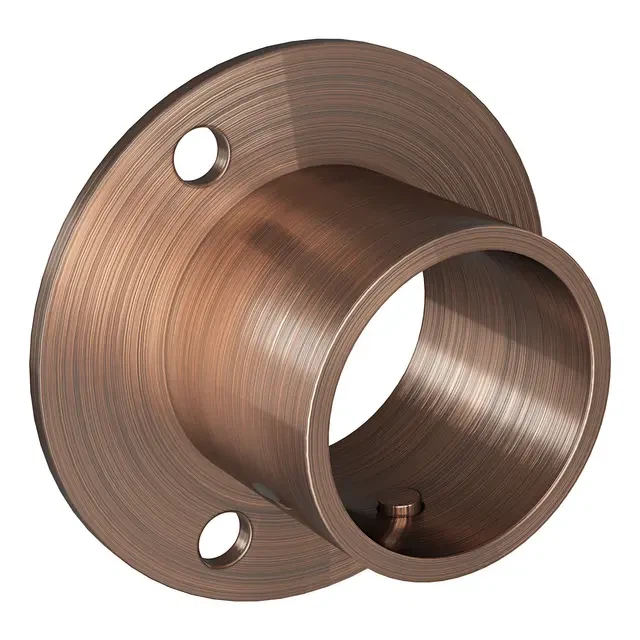
Installation does not end after screws are tightened.
Ensure the rail is fully inserted into each bracket or socket. Partial insertion allows movement and stress concentration.
If using a bracket with retaining features, confirm that the rail is seated evenly before securing.
A bracket that feels secure under light pressure may loosen under sustained load.
Recheck every fixing:
Confirm screws are fully seated.
Verify anchors do not rotate.
Apply even torque without stripping.
A retaining-screw wardrobe socket can further improve containment by locking the rail in place, reducing rotational movement over time.
Proper installation includes understanding how weight interacts with support.
Distribute garments evenly across the rail. Avoid clustering heavy coats on one side.
If heavy items must be concentrated, ensure centre support is positioned directly beneath high-load areas.
Over time, recheck screws periodically. Normal environmental changes and vibration from daily use can cause gradual loosening if initial tightening was incomplete.
Even experienced installers can overlook small details.
Cause: insufficient anchor strength.
Fix:
Remove bracket.
Install appropriate heavy-duty anchors.
Reinstall bracket along same level line.
Cause:
Missing centre bracket.
Span too wide.
Underestimated garment weight.
Fix:
Add centre reinforcement.
Confirm anchor integrity.
Verify rail diameter suitability.
Cause:
Slight misalignment.
Incomplete tightening.
Incorrect pilot hole size.
Fix:
Remove screw.
Inspect anchor condition.
Reinstall with correct torque.
Avoid temporary fixes such as adding filler material around screws. Structural stability requires proper mechanical fastening.
Checkpoint | What “Good” Looks Like | If Not, What to Adjust |
Bracket spacing | Evenly distributed support | Add centre bracket |
Anchor type | Matches wall material | Replace with suitable anchors |
Level alignment | Rail perfectly horizontal | Re-mark and adjust |
Centre support added | Reinforcement installed when needed | Install additional support |
Final load test | No visible sag or movement | Recheck fixings and alignment |
Use this checklist before placing full garment load on the system.
Installation must account for environment.
In humid conditions, stainless steel brackets resist corrosion and maintain structural integrity longer. Plated finishes may suit dry environments.
Temperature fluctuations can cause slight material expansion or contraction. Proper installation accommodates minor shifts without compromising stability.
Rothley’s commitment to responsible manufacturing ensures materials are selected with both durability and environmental considerations in mind.
Bracket installation is not isolated from design philosophy.
Rothley’s approach emphasizes understanding how consumers use their storage spaces. Rather than designing hardware solely around manufacturing convenience, the company considers garment weight patterns, interior aesthetics, and environmental factors.
The Anglo-Sino structure brings together diverse design influences and resourceful production methods, resulting in bracket systems that balance strength, visual appeal, and commercial value.
Secure installation allows these design intentions to translate into real-world reliability.
Adding reinforcement during installation saves time later.
Correct sequence:
Install end brackets securely.
Evaluate span and load.
Add centre bracket where required.
Verify alignment.
Gradually apply load and inspect.
Following this order eliminates unnecessary rework.
Sagging is rarely dramatic; it begins subtly. Early prevention ensures the rail remains straight and dependable over years of daily use.
Installing a Wardrobe Bracket correctly means following a disciplined sequence: measure carefully, secure Wardrobe End Bracket supports first, reinforce with centre brackets when span or load requires it, and complete thorough alignment checks before loading the rail. When installed properly, the hanging rail support structure remains stable, balanced, and reliable. Rothley offers coordinated bracket systems in multiple sizes and finishes to help you build a secure and professional hanging rail support solution. Explore Rothley’s bracket range and contact us to ensure your hanging rail support hardware is installed for long-term performance.
Perform a gradual load test. If the rail remains level and brackets show no movement, installation is secure.
Add reinforcement when span is wide or garments are heavy. It significantly improves structural performance.
Wobble usually results from incomplete tightening, incorrect anchor selection, or improper rail insertion depth.
Yes. Accurate alignment and correct fixings reduce stress concentration and help brackets maintain performance over time.


