
Views: 0 Author: Site Editor Publish Time: 2026-08-06 Origin: Site


High-end wardrobe designs demand hardware balancing structural integrity alongside aesthetic differentiation. Standard round rods often fall short during premium builds. They sag under heavy loads and clash visually inside modern spaces. The Hourglass Closet Tube has emerged as a specified standard for custom closets. It offers superior rigidity and a highly modernized profile. We developed this comprehensive guide to support your next architectural project. It provides designers, contractors, and homeowners a highly practical framework. You will learn specific methods for evaluating and specifying these advanced systems. We will also cover how to properly install hourglass wardrobe tubes on site. Finally, we explore their strictly required supporting hardware in detail. This knowledge ensures flawless execution across any high-end closet build. You can confidently upgrade your storage spaces using these engineered solutions.
Standard round or oval closet rods frequently suffer mid-span deflection. They sag noticeably under heavy winter clothing loads. This deformation ruins the visual appeal of custom cabinetry almost immediately. These older styles also show rapid visual wear. Metal hangers scratch their top surfaces after just a few weeks of use. The closet industry desperately needed a better structural approach. Engineers looked toward architectural aluminum extrusions for inspiration. They developed a shape capable of handling heavier loads over longer distances.
The fluted and ribbed hourglass geometry solves these physical limitations brilliantly. It significantly increases the moment of inertia across the horizontal axis. This engineering principle reduces deflection without adding excessive weight. Your closets safely hold more garments per linear foot. Another major advantage involves the seamless and reversible design. Installers can easily hide manufacturing seams by facing them toward the back wall. You can also rotate the tube later. If wear occurs over time, simply spin the rod. You will display a fresh, unblemished surface instantly. This extends the lifespan of the hardware considerably.
Aesthetic integration plays a crucial role in luxury interior design. Generic chrome round pipes look cheap inside expensive custom millwork. Designers now overwhelmingly prefer matte black and anodized aluminum finishes. These refined options match modern, minimalist cabinetry beautifully. They elevate the entire wardrobe interior seamlessly. The distinctive shape catches the light differently than flat surfaces. It adds a subtle architectural texture to an otherwise purely functional space.
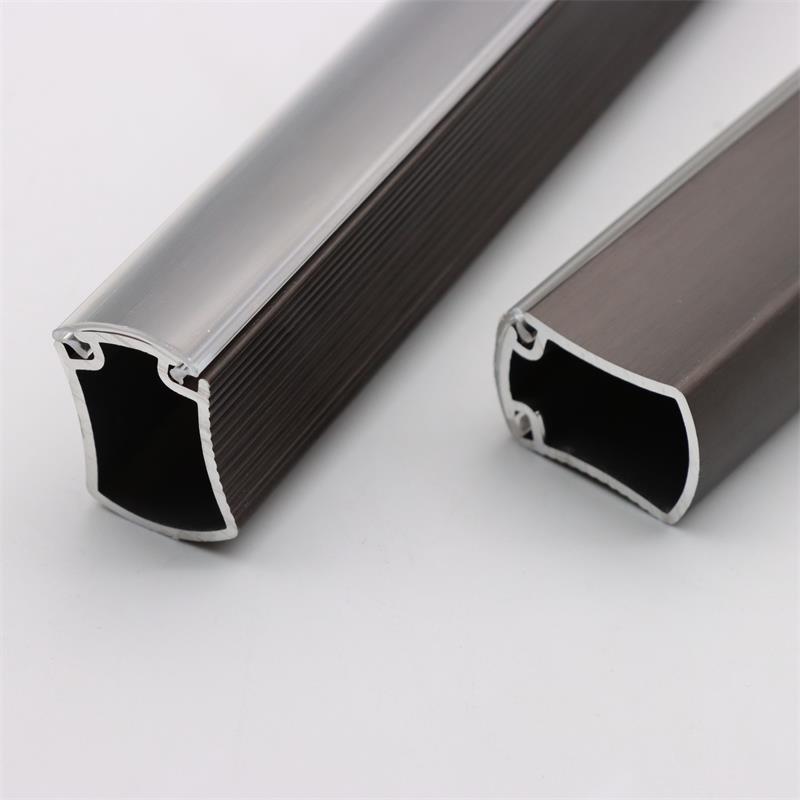
You must assess aluminum extrusion thickness carefully before purchasing. Thicker gauge metal guarantees higher weight capacity per linear foot. A robust wardrobe tube prevents bending during aggressive daily usage. Always verify the wall thickness specifications from the manufacturer. High-end residential builds typically require a minimum of 1.2mm to 1.5mm wall thickness. This specification ensures winter coats and heavy suits will not compromise the structural integrity.
Friction and wear mitigation separate premium products from basic alternatives. Look for models integrating a protective top cover. Manufacturers often use a specialized polymer or rubberized insert here. This insert prevents metal-on-metal scratching completely. It also eliminates the annoying scraping noise caused by sliding hangers. Your clients will appreciate this silent, smooth operation every morning. This small detail heavily influences the perceived quality of the entire closet system.
Finish durability requires specific attention during the selection phase. You should carefully contrast standard powder-coated finishes against premium anodized finishes. Powder coating remains prone to chipping over time. This happens quickly if no protective polymer cover exists. Anodized finishes offer significantly higher scratch resistance overall. The electrochemical anodizing process bonds the color directly into the metal surface. It creates an exceptionally hard outer layer capable of surviving decades of friction.
The scale of your purchase dictates your procurement strategy heavily. Custom cut-to-size orders work best for precise residential retrofits. They eliminate on-site cutting errors entirely, saving contractors valuable time. Bulk commercial sizing suits multi-unit build-outs much better. Purchasing 96-inch lengths in case packs offers much better profit margins. However, this bulk approach strictly requires on-site fabrication and precise labor.
| Procurement Method | Best Used For | Primary Advantage | Installation Requirement |
|---|---|---|---|
| Custom Cut-to-Size | Single residential retrofits | Zero waste, perfect factory edges | Ready to install immediately |
| Bulk Case Packs (96") | Multi-unit commercial builds | Lower cost per linear foot | Requires careful on-site cutting |
Hourglass tubes remain completely incompatible against standard round flanges. You cannot mix these hardware types safely under any circumstances. Installers must match mounting hardware strictly to the extrusion profile. Using the wrong flange creates a loose fit. This eventually causes the rod to twist or collapse under heavy loads. Always source hardware directly engineered for the specific extrusion shape.
The hourglass end socket provides the primary structural anchor. You must differentiate between concealed-screw sockets and surface-mount sockets. Concealed versions hide all metal fasteners for a cleaner, luxurious look. Surface-mount options often install faster in utility applications. Specify your installation requirements carefully beforehand. Drywall installations strictly require solid wood blocking behind the wall. Cabinet mounting requires a minimum panel thickness for secure anchoring. We strongly recommend using 3/4-inch MDF or plywood. Thinner materials like 5/8-inch particle board lack the necessary screw pull-out strength.
Longer spans introduce entirely new structural demands. You must define the maximum unsupported span early in the design phase. This limit typically ranges between 36 to 48 inches depending on material gauge. Exceeding this limit makes a center support absolutely mandatory. The hourglass centre bracket solves this issue brilliantly. It supports the rod securely from above. This unique top-down mounting allows uninterrupted hanger sliding across the entire span. Standard bottom-up brackets always block hangers from passing through, frustrating the end user daily.
Measurement tolerances present significant challenges during installation. The biggest risk involves cutting a custom wardrobe tube too short. A standard industry rule prevents this costly mistake completely. First, measure the exact internal span of the cabinet opening. Next, deduct the exact thickness of both end sockets combined. This simple math ensures a perfectly snug fit every time. You should always measure twice before cutting expensive architectural aluminum.
Clearance depth represents another critical planning metric. Ensure the center line of the tube sits properly inside the cabinet. Install it at least 10 to 12 inches from the back wall. This depth accommodates standard adult hangers effortlessly. It prevents garment crushing against the rear panel. If you place the rod too close to the back, suit jackets will sit at an awkward angle. They will ultimately wrinkle and damage the fabric.
Cutting aluminum hourglass profiles on-site requires specific best practices. Poor cutting techniques ruin the finish instantly. A jagged edge will not seat properly inside the socket. Follow these structured steps for perfectly clean results:
These professional steps protect your investment during complex residential retrofits. Taking your time during the fabrication stage guarantees a flawless, premium result.
The transition toward an hourglass closet tube is fully justified by structural science. It delivers exceptional long-term durability and heavily reduces mid-span sag. The premium aesthetics outshine legacy round rods completely. You achieve a highly refined, architectural look matching modern custom millwork perfectly. Integrating the protective polymer covers ensures silent operation and zero hanger scratching.
Your next steps involve careful project planning and measurement. Measure the clear span of all closet sections accurately. Determine immediately if your longer spans require specialized center brackets. Finally, finalize your purchasing strategy based on your labor capabilities. Decide whether a pre-cut residential order or bulk-length commercial purchase aligns best. These deliberate actions guarantee a successful, beautiful, and highly functional wardrobe installation.
A: Varies by gauge and length, but typically supports 40–50 lbs per linear foot when properly anchored with an hourglass end socket.
A: Yes. The top curve of the hourglass shape is designed to accommodate standard wire, velvet, and wooden hanger hooks perfectly.
A: For spans exceeding 48 inches, or spans over 36 inches that will exclusively hold heavy items like winter coats or motorcycle leathers.
A: Use a hacksaw with a fine-tooth metal blade or a miter saw with a non-ferrous cutting blade. Always file the edges before inserting into the sockets.


