
Views: 0 Author: Site Editor Publish Time: 2026-08-05 Origin: Site


Retail floor space is a high-cost asset where every square foot dictates profitability. Inefficient layouts often result in dead zones, cluttered presentations, and significantly reduced sales metrics. A strategically deployed Garment Hanging Rail does much more than hold inventory. It directs foot traffic, enforces strict planogram compliance, and elevates the perceived value of your merchandise.
This guide provides a comprehensive framework to help you plan retail displays. We will explore how to evaluate, calculate, and select the right systems for commercial retail environments. You will learn actionable rules to optimize floor capacity, protect your brand aesthetic, and execute visual merchandising strategies flawlessly.
Arbitrary rack placement often leads to chaotic store environments. Successful retailers transition away from guesswork. They move toward data-driven spatial planning known as planograms. These visual maps dictate exactly where products belong. When you integrate hanging fixtures into your planograms, you gain complete control over how shoppers navigate your store.
Effective planograms rely on diverse presentation methods. You must balance two primary hanging strategies:
Beyond basic hanging, these fixtures excel at cross-merchandising. Cross-merchandising groups complementary items together. Imagine hanging a tailored jacket directly next to folded denim on adjacent shelving. You show the customer a complete look. Outfit walls inspire shoppers to buy entire ensembles. This strategy reliably increases your Average Order Value (AOV).
Best Practice: Always place your front-facing displays near high-traffic aisles. Keep shoulder-out racks tucked slightly deeper into the department to hold bulk inventory.
Not all inventory belongs on a hanger. You must establish clear store rules based on fabric types and visual goals. Throwing everything onto a rail wastes valuable space. It can also damage delicate materials over time.
When should you hang merchandise? Prioritize garments prone to wrinkling. Silks, linens, and fine cottons need vertical space. You should also hang high-margin outerwear. Complex silhouettes like dresses and tailored suits require hanging as well. For these items, their structural drape acts as a primary selling point. Shoppers need to see how the garment falls naturally.
Hanging systems offer a major spatial advantage. They utilize vertical airspace. This frees up mid-level sightlines compared to bulky floor tables. You can pack more inventory into a smaller footprint when you build upward.
However, over-reliance on hanging carries distinct risks. If you place tall fixtures near the front doors, you block sightlines to the back of the store. Shoppers might miss entire departments. You must balance your layout with varied height variations. Use low tables up front and transition to taller hanging systems along the perimeter walls.
| Garment Type | Preferred Method | Primary Reason |
|---|---|---|
| Tailored Suits & Blazers | Hang | Preserves structural integrity and shoulder padding. |
| Heavy Knitwear & Sweaters | Fold | Hanging causes gravity to stretch and warp the knit. |
| Silk Blouses & Dresses | Hang | Prevents severe creasing and highlights the fabric drape. |
| Denim Jeans | Fold (Mostly) | Stacks neatly; highly durable fabric doesn't wrinkle easily. |
The shape of your tubing fundamentally changes how merchandise displays. Retail planners evaluate cross-sections carefully to match hardware with inventory types.
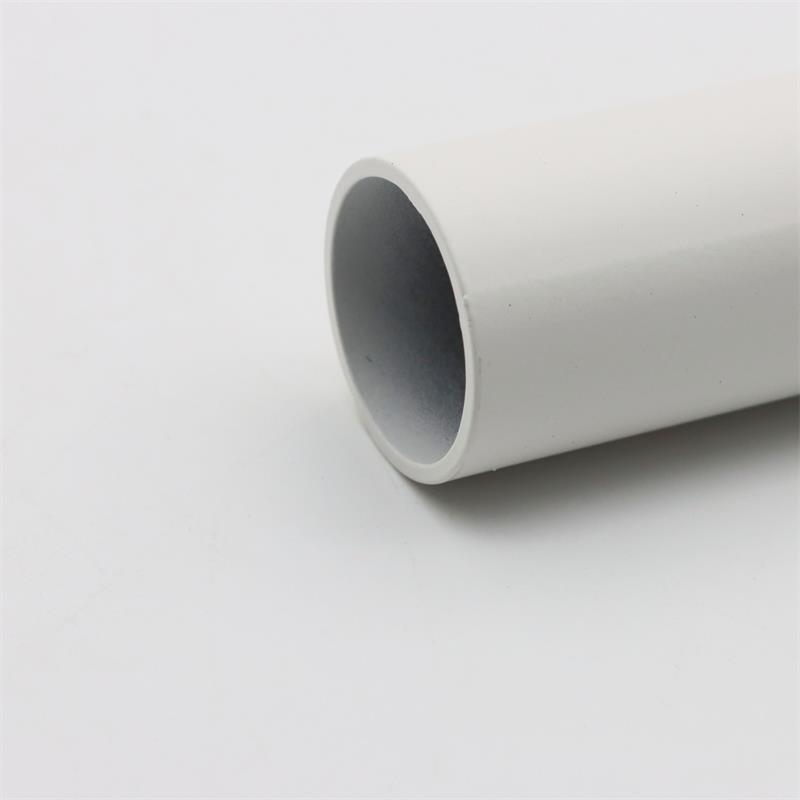
First, consider the round garment rail. It serves as the industry standard for basic apparel displays. It offers highly versatile use across standard circular floor racks and basic wall systems. Manufacturers produce round profiles in massive quantities, making them readily available.
Despite its popularity, the round profile has limitations. Under heavy loads, hangers tend to swing. They can twist around the curved surface when shoppers browse aggressively. This disrupts those strict visual merchandising lines you worked hard to create.
Next, evaluate the oval garment rail. This flat-sided profile excels in premium retail environments. Store designers choose it for tailored garments and heavy winterwear.
The structural advantage is significant. The flatter top profile prevents hangers from twisting. It keeps merchandise perfectly parallel. When customers flip through shirts, the hangers fall right back into alignment. Additionally, the vertical orientation of the oval shape often provides higher resistance to downward deflection over longer spans. This keeps your store looking immaculate, even during peak shopping hours.
Jamming too much clothing onto a single fixture creates a terrible shopping experience. The problem with overcrowding goes beyond aesthetics. Jammed rails damage delicate fabrics through excessive friction. They frustrate shoppers who cannot easily pull items out to inspect them. Ultimately, an overcrowded rack cheapens your brand perception.
You need a standard garment hanging rail capacity plan. Floor density must follow strict mathematical formulas to maintain a premium feel. Do not leave capacity decisions to chance. Use these baseline density formulas to plan your floors:
Common Mistake: Failing to account for winter coat weights. A standard 4-foot section must support upwards of 100 pounds during the winter season. You must define the maximum span between support brackets before any bowing occurs. Never space brackets wider than 48 inches for heavy inventory.
| Apparel Category | Space Per Item | Maximum Items (per 4ft Rail) |
|---|---|---|
| Lightweight (Shirts) | 1 inch | Approx. 40-45 items |
| Midweight (Jackets) | 1.5 inches | Approx. 25-30 items |
| Heavyweight (Coats) | 2.5 inches | Approx. 15-18 items |
Commercial environments punish store fixtures daily. Shoppers lean on them. Staff drag heavy items across them. When evaluating materials, retail planners quickly reject aluminum or plastic composites for high-traffic zones. They simply cannot withstand the abuse.
The steel advantage becomes obvious during load-bearing tests. A high-quality steel hanging rail prevents "center sag" over extended wall spans. Deflection makes a store look poorly maintained. Steel keeps lines rigid and professional.
Aesthetic longevity provides another compelling reason to choose steel. High-grade steel resists scratching better than softer metals. Whether you select a chrome-plated, matte black, or brushed brass finish, steel stands up to metal hangers sliding across it thousands of times. It maintains its showroom finish season after season.
Finally, you must consider compliance and risk. Safety liabilities can ruin a retail business. You must highlight anti-tip requirements for any freestanding steel racks. Store builders must follow secure wall-mounting protocols. Always anchor fixed rails directly into wall studs or heavy-duty structural uprights. Ensuring customer safety is non-negotiable.
Effective retail display planning merges visual aesthetics with structural engineering. You cannot build a high-converting store layout on flimsy hardware or arbitrary placement strategies.
A: It varies by material and bracket spacing. A heavy-duty steel hanging rail can typically hold 100–150 lbs per 4-foot section, provided brackets are securely anchored into wall studs or heavy-duty uprights.
A: Not strictly better, but functionally different. Oval rails provide a premium, uniform look by keeping hangers from swinging and are often preferred for heavy, structured clothing. Round rails are universally compatible and cost-effective.
A: Measure the usable length of the rail in inches. Divide by your garment type allowance (e.g., 1 inch for shirts, 2 inches for coats) to find the maximum visual capacity. Always leave 10-15% of the rail empty to allow customers to easily slide and view items.


