
Views: 0 Author: Site Editor Publish Time: 2026-08-05 Origin: Site


Designing functional, high-capacity hanging spaces remains a common challenge in custom cabinetry. Clients expect high-end aesthetics in their homes. They also demand hardware resisting sagging over time. A sagging clothes rail ruins the look of premium millwork. The wardrobe tube acts as a critical hardware component here. It dictates structural integrity. It also determines spatial efficiency across the final cabinet build. Selecting the proper components ensures your closet system functions beautifully. We will explore how to specify the best hardware for your build. You will learn to evaluate profiles, materials, and mounting techniques. This technical framework ensures your custom storage solutions perform flawlessly. By understanding these hardware fundamentals, you avoid frustrating installation delays. You deliver superior storage results.
Choosing the wrong hardware profile causes significant daily frustration. Poor profile selection leads to hanger friction. It wastes valuable vertical space inside cabinet boxes. It also leads to mismatched hardware aesthetics. We must match the profile directly to the specific closet design. Designers evaluate two primary shapes during the planning phase. Each shape offers distinct mechanical advantages.
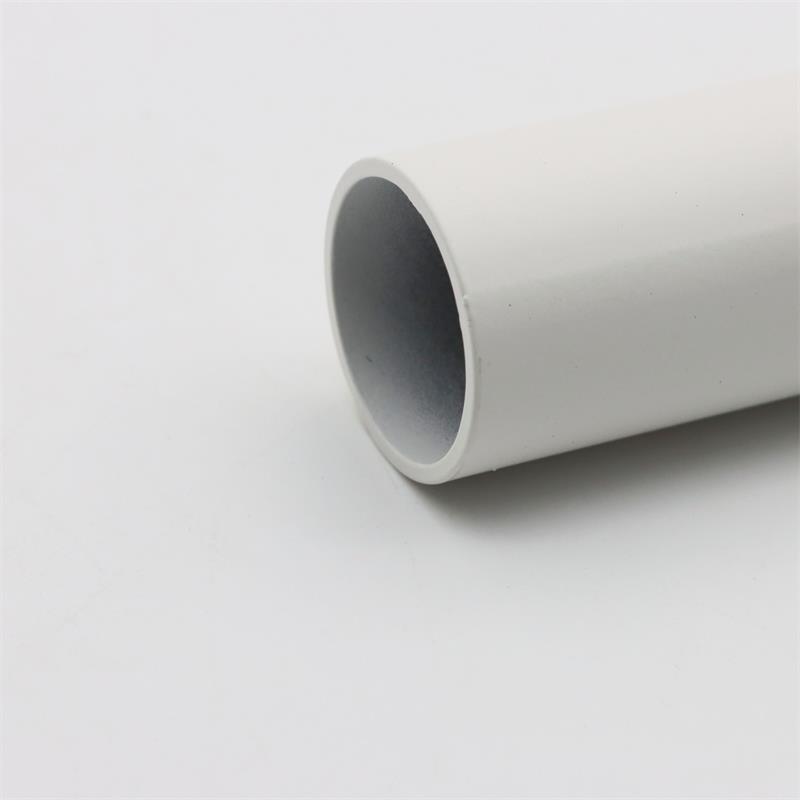
The traditional circular shape dominates residential closet designs. A standard round wardrobe tube provides predictable, reliable performance. Installers favor this shape for its universal familiarity. The circular geometry distributes weight evenly across the mounting flanges.
Pros: This profile represents the industry standard. Installers find it highly compatible across aftermarket flanges. It allows metal and plastic hangers to slide easily. You experience minimal friction during daily use.
Best For: Use this profile inside spacious walk-in closets. It excels in deep cabinets featuring a 24-inch depth. We recommend it for heavy-use applications requiring frequent clothing rotation.
Modern cabinetry trends lean toward streamlined, space-saving hardware. The elliptical shape addresses tight vertical constraints beautifully. An oval wardrobe tube requires slightly different mounting brackets. However, it delivers exceptional lateral rigidity. The taller vertical axis resists bending remarkably well.
Pros: You gain a slimmer vertical footprint. This profile provides rigid lateral strength against heavy loads. The modern aesthetic pairs perfectly alongside frameless RTA units. It enhances custom built-in cabinets instantly.
Best For: Specify this shape for shallow reach-in closets. It dominates stacked double-hang configurations. Use it wherever every single inch of vertical clearance matters.
Profile Comparison Matrix
| Feature | Round Profile | Oval Profile |
|---|---|---|
| Vertical Footprint | Standard (Requires more drop space) | Slim (Saves vertical drop space) |
| Hanger Glide | Exceptionally smooth | Slightly more friction, highly stable |
| Aesthetic Style | Traditional / Classic | Modern / Contemporary |
| Lateral Rigidity | Moderate to High | Very High |
Material choices directly influence the longevity of custom cabinets. You must assess materials using strict evaluation dimensions. We analyze weight capacity limits. We also calculate deflection thresholds carefully. Designers match the material to the anticipated clothing load.
Wood vs. Aluminum: Wooden poles offer a rustic aesthetic. However, wood remains prone to warping under moderate loads. Fluctuating humidity exacerbates this bending. Aluminum provides a lightweight alternative. It strongly resists rust inside damp environments. Unfortunately, aluminum exhibits a lower threshold for deflection. It tends to sag across long, unsupported spans.
The Case for Steel: Heavy garments demand superior structural support. A steel closet tube remains the undisputed standard for high-end builds. You must specify steel for spans exceeding 48 inches. It handles extreme capacities effortlessly. Heavy winter coats will not cause it to bow. You prevent middle sagging entirely. High-capacity custom builds rely on this rigid metal framework to maintain crisp cabinet lines.
Finish and Wear: Metal parts endure significant daily abuse. Hangers scrape against the top surface constantly. We evaluate how different finishes withstand this metal-on-metal friction. Chrome plating offers exceptional scratch resistance. Matte black powder coating provides a sleek, modern finish. Brushed brass adds warmth to luxury cabinets. These metal finishes outlast painted wood significantly. Anodized aluminum scratches easily over time. Steel finishing techniques bond deeply to the base metal. This ensures the hardware looks pristine years after installation.
Engineering a flawless closet requires precise load calculations. You cannot simply guess the required support structures. We must address the actual realities of weight distribution.
Implementation Considerations: Clothing carries substantial weight. Men's suits weigh approximately 2 to 3 pounds each. Heavy winter coats often exceed 5 pounds. You must calculate the average weight per linear foot. A densely packed 3-foot section might hold 60 pounds of garments. Calculate these loads before finalizing your hardware orders.
Deflection Limits & Center Supports: Every material possesses a maximum unsupported limit. The general rule of thumb for unsupported spans ranges from 36 to 48 inches. Wood maxes out around 36 inches. Steel can push closer to 48 inches safely. Center support brackets become absolutely mandatory past these limits. You must tie this center bracket securely to a fixed cabinet shelf above. Floating supports offer zero structural value.
Mounting to Cabinet Walls: We frequently see identical failures across home improvement forums. The failure point rarely involves the pole snapping. Instead, flange attachment fails spectacularly. Overcoming common DIY and contractor errors requires better fasteners. We evaluate two main flange types. Screw-in flanges work well into solid wood. Alternatively, use 5mm dowel pegs for pre-drilled 32mm system holes. The 32mm European system provides perfectly aligned mounting points.
Risk Mitigation: Custom cabinets often utilize engineered woods. Securing heavy loads to 5/8-inch MDF presents distinct structural risks. Particleboard threads strip out easily under shear weight. We recommend using blocking techniques. Reinforce the cabinet side panels secretly from behind. Alternatively, utilize specialized Euro-screws. They feature thicker threads designed specifically for composite materials. Proper anchorage prevents catastrophic closet collapses.
Hardware selection cannot happen as an afterthought. It drives the entire spatial geometry of the closet. We follow strict shortlisting logic to finalize hardware choices. You base these decisions purely on the spatial layout.
Shortlisting Logic: Review your cabinet blueprints closely. Identify single-hang sections versus double-hang sections. Note the depth of your cabinet boxes. Shallow boxes restrict your choices. Deep boxes allow greater flexibility. Finalize your hardware based on these physical constraints.
Clearance Formulas: Standard vertical drop requirements dictate shelf placement. Men's dress shirts generally require a 40-inch vertical drop. Long evening dresses demand at least 65 inches. You must also account for the hardware itself. The tube's physical dimension directly affects shelf placement above it. If you use a 1-1/4 inch diameter pole, you must lower your mounting point accordingly. Always measure from the top edge of the pole to the floor.
Design Software Alignment: Digital planning prevents physical errors. Ensure you account for the exact outer diameter (OD). Input this precise OD into your cabinet design software. Many designers mistakenly use the inner diameter. This creates tight clearances later. Accurate CAD inputs prevent installation-day alignment issues. Provide your CNC operator with the exact hardware specifications beforehand. This guarantees pre-drilled holes match your flanges perfectly.
Designing a structurally sound custom cabinet requires systematic planning. We follow a strict decision-making sequence. First, measure your maximum span. Next, determine the anticipated clothing load. Then, select your material accordingly. Steel handles heavy loads, while aluminum suits lighter applications. Choose your preferred profile based on aesthetics and vertical clearance limits. Finally, specify robust mounting hardware tailored to your panel material.
Always finalize your cabinet layout with precise hardware dimensions in hand. Do this before ordering custom cut materials. By integrating your hardware choices early, you eliminate structural risks. You ensure the final installation looks premium and performs flawlessly for decades.
A: A standard steel pole generally holds between 45 to 65 pounds per linear foot before showing signs of deflection. Aluminum models hold approximately 30 to 45 pounds per linear foot. Always install a center support bracket for any span exceeding 48 inches to maintain straight lines under maximum capacity.
A: Yes. You can cut metal poles using a standard hacksaw or a specialized pipe cutter. A rotary pipe cutter provides the cleanest edge without jagged burrs. Always wear protective safety glasses. Measure twice, subtract the thickness of both mounting flanges, and cut slowly to avoid damaging the finish.
A: For a single-hang configuration, mount the pole approximately 65 to 68 inches from the floor. For a double-hang configuration, place the top pole at 80 to 84 inches and the bottom pole at 40 to 42 inches. Ensure you leave at least 2 inches of clearance between the pole and the shelf above.
A: No. They do not require special hangers. Standard plastic, velvet, and wooden hangers fit perfectly over oval profiles. The elliptical shape simply alters the contact point. It allows hangers to slide smoothly while preventing them from twisting sideways as easily as they might on a circular profile.


