
Views: 0 Author: Site Editor Publish Time: 2026-08-06 Origin: Site


Modern design demands flawless transitions from traditional round rods to sleek architectural hardware. Today, high-end cabinetry requires internal components that reflect both luxury elegance and industrial strength. We face a highly specific design challenge when updating custom closets. Wardrobe hardware must balance minimalist aesthetics while surviving incredibly demanding load-bearing requirements. Bulky round poles often disrupt clean architectural lines and eat up valuable storage space. This article provides a comprehensive technical and aesthetic evaluation framework for selecting commercial-grade or premium residential closet hardware. You will discover practical methods for comparing metal performance across different environments. We detail crucial installation compatibility guidelines for advanced CNC setups. Finally, you will learn how to verify sourcing reliability to ensure your next custom cabinet build meets the absolute highest standards of modern residential design.
Designers constantly look for ways to streamline interior cabinetry spaces. A modern oval wardrobe tube integrates seamlessly into frameless, contemporary cabinet designs. The narrow profile of this hardware complements flush surfaces beautifully. It also works brilliantly alongside integrated LED lighting systems. Bulky round poles cast harsh, unflattering shadows across clothing. An oval shape allows cabinet lighting to cascade cleanly down your garments.
Beyond visual appeal, we must assess stringent functional success criteria. One major frustration for end-users involves spinning hangers. Traditional round designs let hangers pivot wildly when bumped. An oval shape physically restricts this rotation. Garments face forward uniformly, maintaining a showroom appearance. Furthermore, switching to premium extruded shapes dramatically reduces metal-on-metal friction noise. High-quality finishes allow metal and plastic hooks to glide effortlessly rather than scrape aggressively.
Space optimization acts as the final driver for this industry shift. Let us calculate the actual vertical clearance you gain here. Standard round rods often measure 1 inch or 1.25 inches in overall diameter. The modern oval profile utilizes a much tighter 15mm (about 0.6 inches) height profile. You reclaim nearly half an inch of vertical space per tier. Across a multi-tier custom closet, this measurement adds up quickly. It gives you critical extra breathing room for long dresses or stacked shoe shelves below. We highly recommend evaluating your clearance requirements early during the initial cabinet layout phase.
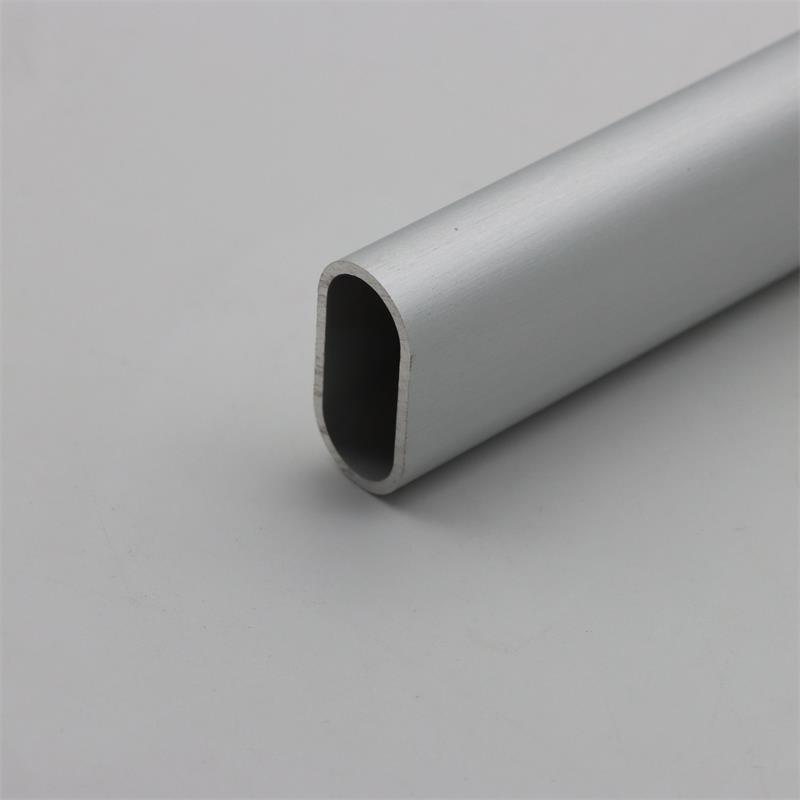
Choosing the right core metal forms the foundation of a successful closet build. You generally face two main structural choices: steel or aluminum. Evaluating the wall thickness, also known as gauge, determines your maximum load capacity. A solid steel oval closet tube excels in heavy-duty environments. We frequently specify steel hardware for commercial retail displays. It also handles residential winter coat storage effortlessly. The inherent rigidity of steel prevents bowing under intense weight over long periods.
Conversely, aluminum options bring very different benefits to the project table. Aluminum offers exceptional natural corrosion resistance out of the box. This characteristic makes it ideal for humid environments or coastal properties. Installers also appreciate how easily they can cut aluminum onsite using standard miter saws. However, you must weigh these physical perks against lower deflection thresholds. Aluminum bends much sooner than steel under heavy stress. We generally reserve aluminum extrusions for lighter, decorative installations where weight capacity is secondary.
Next, you must analyze standard architectural finish durability. Surface treatments dictate both style and longevity. Chrome-plated steel delivers incredibly high wear resistance against friction. It handles constant daily hanger movement without scarring or scratching. Alternatively, you might prefer powder-coated matte black finishes. Black hardware provides exceptional contemporary visual integration. It grounds the interior design beautifully within lighter-colored cabinets.
We must issue a critical performance assumption warning here. Surface finish quality ultimately dictates the functional lifespan of the rod. Do not assume all shiny metals perform equally. Cheap plating chips rapidly under constant hanger abrasion. Once the protective plating flakes off, the underlying metal corrodes and ruins the smooth sliding performance. Always source materials boasting commercial-grade electroplating or baked-on powder coats to avoid premature client complaints.
Supporting extensive wardrobes requires precise mechanical engineering. When you design a long oval closet rail, guesswork leads directly to catastrophic failure. We apply rigid industry-standard load-bearing calculations to closet hardware. The L/400 deflection standard represents a critical engineering benchmark. This rule states a rod should not deflect more than its total length divided by 400 under maximum load. Following this formula prevents highly visible sagging. It ensures the rail remains perfectly horizontal to the naked eye.
Let us define the exact failure points for unsupported spans. Wall thickness plays a massive role in these calculations. A standard 1mm gauge tube might support 40 pounds across a three-foot span. If you push that same gauge to a four-foot span, deflection becomes highly visible and unacceptable. We typically advise adding calculated center supports for lengths stretching beyond 36 to 48 inches. Thicker 1.5mm walls buy you slightly more unsupported distance, but physics still applies.
Engineers must also factor in the crucial difference between dynamic and static loads. Static load simply measures the resting weight of the clothing. However, human user behavior introduces aggressive dynamic forces. People forcefully slide heavy garments from side to side when searching for outfits. Rapid sliding places intense, localized stress on both the metal extrusion and its mounting points. If you ignore dynamic forces, mounting brackets will pull straight out of the cabinet walls over time.
Table: Estimated Deflection Limits and Support Guidelines
| Span Length | Steel Deflection Risk (1mm wall) | Aluminum Deflection Risk (1mm wall) | Recommended Center Support? |
|---|---|---|---|
| 24 inches | Minimal | Minimal | No |
| 36 inches | Minimal | Moderate | Optional |
| 48 inches | Moderate | High | Yes |
| 60 inches | High | Severe | Mandatory |
Proper hardware integration makes or breaks a luxury cabinet project. Even the strongest oval closet tube fails if poorly mounted to the substrate. You must compare various end support selections carefully. Enclosed flanges provide maximum security because the tube cannot pop out upward. Open-top U-brackets offer easier drop-in installation but risk dislodging during vigorous daily use. You also choose between screw-in flanges and tension-fit supports. We strongly prefer screw-in designs for heavier residential loads.
Modern cabinet manufacturing relies heavily on system standardization. Utilizing end supports equipped with 5mm pins transforms the assembly process. These pins provide seamless compatibility with the universal 32mm cabinet manufacturing system. CNC machines pre-drill side panels flawlessly in the shop. Installers simply tap the flange pins directly into these perfectly spaced holes. This methodology ensures rapid, standardized installation across massive multi-unit projects. It guarantees perfect leveling every single time without manual measuring.
We must also address specific installation risks regarding substrate material density. Not all cabinet side panels offer the same screw-holding power. High-quality birch plywood grips metal threads aggressively. Lightweight MDF or particleboard crumbles under excessive shear force.
Follow these best practices to mitigate common mounting mistakes:
These crucial steps protect the long-term integrity of the cabinet walls. They prevent disastrous tear-outs when clients inevitably overload their wardrobes.
Deciding exactly how to procure your hardware impacts both project budgets and delivery timelines. Purchasing pre-packaged kits works perfectly for bespoke, low-volume custom closet builds. A typical premium kit usually includes an Oval Closet Tube, two matching end flanges, and the necessary mounting screws. Kits eliminate the tedious guesswork for residential contractors. They ensure all metal finishes match perfectly straight out of the box.
Conversely, high-volume cabinet manufacturers demand rigorous B2B wholesale procurement strategies. Evaluating suppliers based on raw stock availability becomes a primary concern. You will likely purchase 8-foot or 12-foot stock lengths in bulk quantities. Your fabrication team then cuts these long extrusions down inside the shop. This raw material approach drastically lowers the specific cost per linear foot.
When assessing B2B vendors, look closely at several key evaluation dimensions:
For a highly recommended next-step action, we advise conducting a small pilot installation. Order a sample batch before greenlighting a massive multi-unit rollout. Test the hanger glide yourself. Apply aggressive downward weight to verify structural rigidity firsthand. A physical mockup reveals dimensional tolerances and aesthetic alignment that spec sheets simply cannot convey.
Modern interior closet design requires an uncompromising approach to architectural hardware. You must constantly balance visual design intent with harsh structural realities. Beautiful matte finishes mean absolutely nothing if the rod sags under the weight of winter coats. Selecting the appropriate profile, core material, and mounting system ensures a premium, lasting user experience.
Our final recommendation stands firm for professional installers. Prioritize heavier-gauge steel components paired seamlessly with 32mm-compatible mounting brackets. This combination guarantees long-term reliability and strength in high-end cabinetry applications.
Execute these action-oriented next steps for your upcoming builds:
By integrating these technical practices, you elevate the durability and luxury feel of every custom wardrobe you construct.
A: The recognized industry standard profile measures 30mm in height by 15mm in width (approximately 1.18 inches by 0.59 inches). This specific dimension provides an optimal balance between a low visual profile and high structural rigidity. It universally fits standard mounting flanges across different manufacturers.
A: Capacity depends entirely on span length and wall thickness. A standard 1mm gauge steel tube typically holds around 45 to 50 pounds across a 36-inch span before showing visible deflection. Heavier 1.5mm gauge tubes support up to 75 pounds on the same span. Always add center brackets for longer distances.
A: Yes, you can cut these tubes on-site during installation. You must use a high-tension hacksaw or a power miter saw equipped with a non-ferrous metal blade. After cutting, it is crucial to deburr the sharp edges with a metal file so it slides smoothly into the mounting brackets.
A: Yes, all standard plastic, wooden, and velvet hangers fit comfortably over a 30mm x 15mm oval rail. The primary functional benefit is that the flat sides of the oval shape restrict the hanger hooks from pivoting wildly, keeping your clothes neatly aligned facing forward.


