
Views: 0 Author: Site Editor Publish Time: 2026-07-18 Origin: Site


Storage projects often fail at the most inconvenient times. You might notice sagging shelves holding heavy winter gear. Sometimes, torn drywall anchors leave gaping holes in your walls. In worst-case scenarios, a fully loaded closet rod collapses entirely. These common failures disrupt daily life and pose physical risks.
Selecting the wrong support hardware creates these dangerous situations. Hardware choices directly impact both safety and spatial efficiency in residential and commercial spaces. Many people grab the first bracket they see on a store shelf. They assume all angled metal supports function identically. However, improper selection compromises load-bearing capacity and wastes valuable storage footprint.
You need specific knowledge to build a reliable storage system. This article establishes a clear, technical comparison between standard shelf brackets and specialized dual-purpose hardware. We will break down structural realities, installation risks, and evaluation criteria. You will gain the exact knowledge required to guide your final purchasing decisions.
Functionality: Wardrobe brackets are dual-purpose (supporting a top shelf and a hanging rod), whereas standard shelf brackets are engineered strictly for vertical loads.
Force Distribution: Wardrobe configurations generate dynamic, pull-out forces requiring specialized hardware geometry, unlike the static downward force of standard shelving.
Installation Rigidity: Wardrobe brackets strictly demand direct wall-stud mounting; standard shelf brackets can sometimes tolerate heavy-duty drywall anchors for lighter loads.
Specification: Purchasing requires matching the integrated closet rod bracket to the exact diameter of the hanging pole.
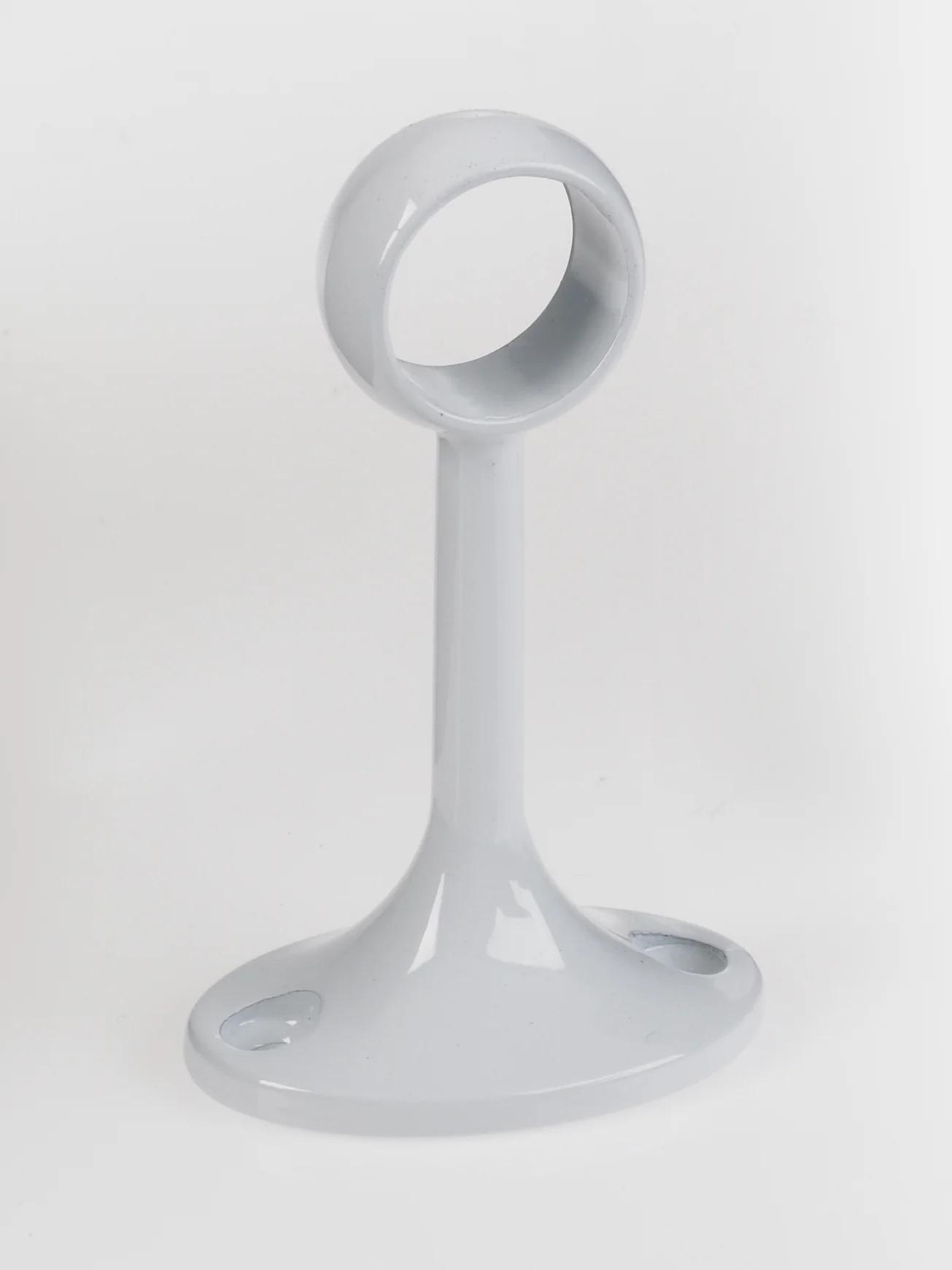
A Wardrobe Bracket performs two distinct jobs simultaneously. It features a horizontal top arm designed for the shelf. Below this arm sits a built-in hook, saddle, or flange. This lower section serves as the support for your hanging pole. This dual-support geometry defines its entire structural purpose. Manufacturers engineer these pieces to handle complex weight distribution.
Clearance depth represents a critical design feature here. Designers build these units with an extended drop and an outward depth. They typically extend 10 to 12 inches away from the wall. Why does this matter? Standard clothing hangers measure about 18 inches across. The extended clearance ensures your garments hang straight down. Clothes will not crush against the back wall. You maximize fabric care and accessibility.
Standard units feature a strictly single-purpose design. You usually see an L-shaped or gusseted structure. Some models include a diagonal strut for extra rigidity. They exist solely to hold flat materials like wood, wire, or glass. They do not accommodate hanging rods.
The physical profile sits entirely flush against both the wall and the shelf. This flush design optimizes maximum weight distribution across the vertical plane. It ignores hanging clearance completely. Engineers focus purely on holding flat items securely.
| Feature | Wardrobe Model | Standard Model |
|---|---|---|
| Primary Function | Dual-support (shelf + rod) | Single-support (shelf only) |
| Wall Clearance | 10–12 inches typical | Flush to shelf depth |
| Geometry | Extended drop with saddle/hook | L-shaped or gusseted |
| Space Utilization | Maximizes vertical garment space | Optimizes horizontal flat space |
Understanding weight types prevents catastrophic hardware failures. Standard shelf brackets manage static loads. They hold dead weight like books, storage boxes, or pantry cans. This load remains predictable. It presses directly downward onto the horizontal arm. The hardware only fights gravity acting in a straight vertical line.
Conversely, wardrobe systems manage highly dynamic loads. They hold the static dead weight of the top shelf. Simultaneously, they must handle shifting forces below. Consider the movement of sliding hangers. Think about the heavy, concentrated weight of winter coats. Add the aggressive pulling motions users make when grabbing clothes in a hurry. These shifting actions create dynamic stress on the entire assembly.
Physics dictates how hardware behaves under stress. The extended hook of a Closet Rod Bracket changes everything. It shifts the center of gravity significantly away from the wall. This outward shift acts like a crowbar. It multiplies the pulling force acting on the top mounting screws.
This leverage drastically increases shear stress on the top wall fasteners. Direct downward force transforms into rotational pull-out force. Because of this stress, manufacturers must use thicker steel gauges. Installers must use much longer mounting screws compared to standard flat shelving. You cannot underestimate this rotational force.
| Load Characteristic | Standard Shelf Setup | Wardrobe/Closet Setup |
|---|---|---|
| Force Direction | Vertical (Downward) | Vertical & Rotational (Pull-out) |
| Weight Behavior | Static (Stationary) | Dynamic (Shifting/Sliding) |
| Primary Stress Point | Bracket corner/gusset | Top wall fastener |
DIY enthusiasts and hasty contractors often make a critical mistake. They attempt to reverse or modify bracket orientation to fit awkward spaces. You might see someone flip a bracket upside down to save an inch of overhead room. This seems clever, but it invites disaster.
Altering orientation shifts the intended load-bearing axis completely. Engineers design specific tension and compression zones within the metal. Reversing them puts tension on parts designed only for compression. This leads directly to catastrophic hardware failure. It proves especially dangerous under the complex dual-load of a wardrobe setup. Always follow the stamped directional arrows.
Wall fastening demands absolute precision and compliance. You cannot guess your anchor strength here.
Stud dependence remains non-negotiable for clothing storage. Wardrobe hardware cannot safely rely on toggle bolts. Standard drywall anchors will inevitably fail. The leverage effect we discussed earlier will literally rip drywall chunks out of the wall. Screws must bite deep into structural wood or metal studs.
Spacing standards dictate structural integrity. Industry compliance requires specific mounting intervals to prevent rod deflection. You must follow strict guidelines to keep poles from bowing:
Locate the first wall stud near your starting wall.
Mount the first bracket securely into the stud center.
Measure no more than 32 inches maximum for standard residential setups.
Mount your next bracket into the corresponding stud.
For heavy-duty commercial applications, reduce this spacing to every 16 inches.
Ensure the hanging pole rests evenly across all installed saddles.
Certain room configurations demand specialized hanging hardware. Walk-in closets represent the most obvious use case. Mudrooms also benefit greatly, holding heavy seasonal jackets. Laundry rooms need them for hanging damp, heavy garments to dry. Retail clothing displays rely on them for massive inventory loads.
Component matching acts as your primary purchasing filter. You must verify saddle and hook sizes before clicking buy. Poles come in varying diameters. A bracket saddle designed for a 1-inch pole will not accept a 1-5/16-inch heavy-duty wooden rod. Always measure your intended pole diameter first.
Best for environments requiring dual storage (boxes above, coats below).
Essential for spaces handling heavy, shifting textile weight.
Requires careful matching of pole diameter to saddle size.
Flat storage solutions solve different spatial problems entirely. Pantries rely on them for canned goods. Garages use them for heavy toolboxes and paint cans. Bookcases and decorative floating shelves in living rooms use them almost exclusively.
Space optimization drives this choice. They prove ideal when vertical space feels tight. The hanging drop of a closet rod would interfere with items stored directly below. If you plan to park a lawnmower under a garage shelf, you skip the hanging mechanism. You choose a flush, heavy-duty L-bracket instead.
Best for high-density, flat-item storage.
Essential for narrow corridors lacking 18-inch hanger clearance.
Ideal for maximizing vertical stacking without downward obstructions.
Hardware aisles overwhelm buyers with identical-looking metal triangles. You need a systematic way to assess true quality. Weight rating transparency serves as your first major clue. Look for manufacturers providing weight limits per pair based on specific installation conditions. A trustworthy label reads: "500 lbs per pair when mounted to wood studs." You should always be skeptical of astronomically high load claims lacking mounting context. If a box claims "1000 lbs" but does not mention studs, they are misleading you.
Next, evaluate material and weld integrity closely. Pick up the unit and examine the joint. Look exactly where the rod holder meets the main support arm. You want to see continuous welds running along the entire seam. Avoid units showing only tiny, isolated spot welds. Spot welds pop easily under dynamic shear stress. Continuous welds distribute shifting weight safely into the main steel body.
Finally, consider the finish and the intended environment. Bare steel rusts rapidly. We highly recommend powder-coated steel for long-term durability. Rust-resistant finishes remain non-negotiable for damp areas. Laundry rooms generate high humidity. Poorly ventilated closets trap seasonal moisture. Cheap paint flakes off when metal hangers scrape across it daily. Powder coating bonds thermally to the metal, resisting scratches and blocking oxidation.
Choosing the correct support hardware anchors any successful storage project. The final decision ultimately comes down to structural intent. You must decide whether you are supporting a single static load or a dual dynamic load. Ignoring this fundamental difference leads to damaged walls and ruined garments.
You are now ready to execute your project safely. Take clear, actionable next steps before purchasing. Measure your exact wall stud spacing using a reliable stud finder. Verify your intended closet rod diameter down to the fraction of an inch. Calculate the total anticipated weight of your heaviest winter garments and top-shelf storage bins. Armed with this accurate data, you can confidently finalize your hardware order and build a system designed to last a lifetime.
A: Yes, but only if you purchase and install separate, add-on rod flanges. However, an integrated wardrobe bracket is structurally superior and easier to align.
A: Depending on the steel gauge and stud installation, quality residential brackets hold between 250 to 500 lbs per pair. Always refer to the manufacturer's spec sheet.
A: The industry standard is one bracket every 32 inches to prevent the wooden or metal rod from bowing under the weight of garments.


