
Views: 0 Author: Site Editor Publish Time: 2026-07-19 Origin: Site


A sudden crash in the middle of the night signals a frustrating disaster. You walk into your bedroom to discover collapsed shelves and sagging rods scattered across the floor. This remains the most common closet storage failure today. People often blame the shelving material itself. In reality, under-engineered support hardware almost always causes the collapse. Custom wood shelving always gets the visual attention during a renovation. Yet, the structural integrity of any storage system relies entirely on the hidden hardware supporting it behind the scenes.
We designed this comprehensive guide as a practical decision-making tool. You will learn exactly how to evaluate, select, and install a highly reliable support system. Understanding these core mechanical principles helps you prevent structural failure permanently. You can confidently maximize your load capacity without fear. Read on to discover the exact specifications required to build a storage space built for a lifetime of heavy use.
A dedicated wardrobe bracket acts as the foundational load-bearing point, transferring the weight of garments and shelving safely into the wall studs.
Selecting the right closet storage bracket requires matching the hardware’s weight rating with your specific wall composition and stud spacing.
High-quality brackets utilize reinforced gussets and heavy-gauge steel to prevent lateral movement and metal fatigue over time.
Proper installation requires strict adherence to maximum span distances (typically 16 to 32 inches) to prevent rod deflection.
Most homeowners drastically underestimate the compounding weight of standard clothing. A single winter coat often weighs up to four pounds. Heavy denim jeans, wool suits, and thick sweaters add up incredibly fast. These standard garments can easily exceed 40 pounds per linear foot of rod space. When you multiply this by a standard four-foot closet section, you routinely hang over 160 pounds of static weight. This constant downward force never rests. It continually tests the limits of your hardware.
Failing to respect this weight introduces severe downstream risks. Cheap hardware bends slowly over time before snapping entirely. When a cheap Wardrobe Bracket fails, it rarely falls cleanly. The screws violently tear out chunks of your drywall. The falling metal rod frequently damages your expensive custom cabinetry. It ruins delicate clothing items caught in the collapse. You ultimately face the steep financial cost of a total system replacement. Drywall repair adds immediate frustration and labor to your weekend.
You must define what a successful installation looks like before buying materials. We judge success using three strict criteria. First, you need zero rod deflection under maximum load. The horizontal pole must remain perfectly straight from end to end. Second, you must achieve a completely flush wall mounting. The metal baseplate should never pull away or gap from the drywall surface. Finally, you need long-term hardware rigidity. You should never see metal fatigue or drooping arms even a decade after the initial installation.
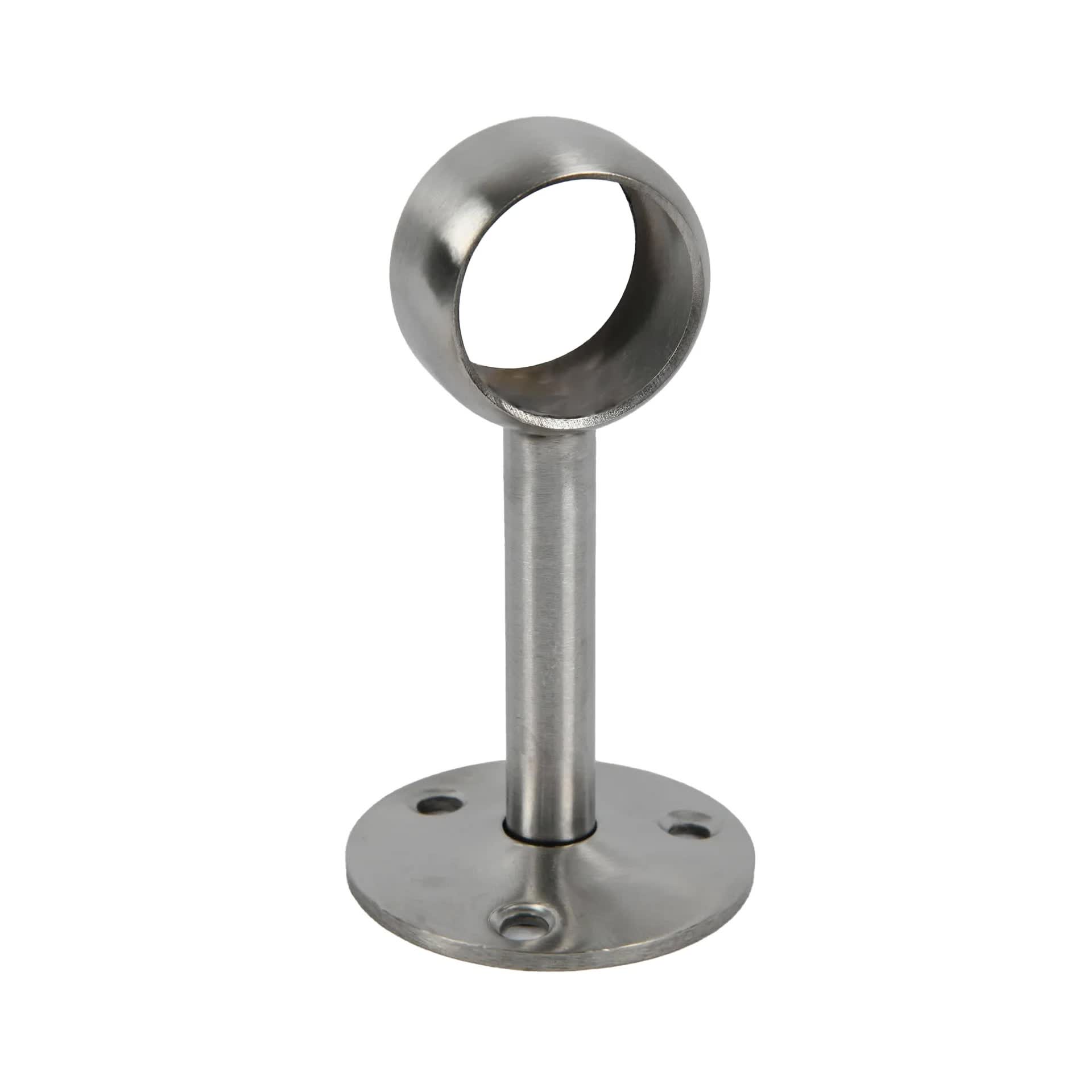
Understanding material composition separates amateur setups from professional installations. Manufacturers typically stamp basic hardware from zinc, mold it from plastic, or forge it from heavy-gauge steel. Plastic warps significantly under continuous tension. Stamped zinc easily snaps when overloaded by winter gear. Heavy-gauge solid steel remains entirely non-negotiable for primary load-bearing applications. It firmly resists bending. It effortlessly holds massive static loads for decades.
Structural gussets play a critical role in weight management. A gusset acts as the diagonal support beam connecting the vertical wall plate to the horizontal shelf arm. This geometric reinforcement distributes shear force evenly across the entire unit. It pulls dangerous stress away from the delicate top wall anchors. A properly gusseted Closet Storage Bracket stops the horizontal arm from bending downward. You should avoid any right-angle bracket lacking this essential diagonal reinforcement.
You must also look closely at the rod cup design. Standard open-hook designs loosely cradle the rod. They allow the pole to lift, bounce, or spin when you aggressively slide hangers. Closed-loop or locking cups offer vastly superior daily function. They capture the rod completely inside a metal ring. They completely prevent annoying rod roll. They keep your hangers sliding smoothly in one predictable direction.
Finish quality determines longevity just as much as the core metal. Powder coating consistently beats standard wet paint. Standard paint chips away easily during installation. Metal hangers scratch painted surfaces daily. Powder coating binds thermally to the steel at extreme temperatures. It actively prevents aggressive hanger abrasion. It stops moisture-induced corrosion, especially in damp climates or poorly ventilated rooms.
| Material Type | Load Capacity | Durability & Risk | Best Application |
|---|---|---|---|
| Plastic / Resin | Low (Under 20 lbs) | Prone to warping and snapping under continuous tension. | Lightweight nurseries or temporary utility closets. |
| Stamped Zinc | Medium (20 - 50 lbs) | Brittle under sudden heavy loads. Can bend laterally. | Standard guest bedrooms with minimal clothing. |
| Heavy-Gauge Steel | High (100 - 250+ lbs) | Exceptional rigidity. Resists metal fatigue entirely. | Primary walk-in closets, heavy winter gear, retail displays. |
You have several architectural options when designing your space. Standard shelf and rod combinations remain the primary industry standard. They maximize vertical space highly efficiently. They independently support both overhead shelf weight and hanging loads below. This dual-function approach saves money and installation time. It provides a clean, unified look across the entire wall.
Heavy-duty J-brackets serve a slightly different purpose. Manufacturers design them specifically for extreme high-capacity applications. Commercial retail stores rely heavily on them. You should use them at home for heavy winter gear or motorcycle leathers. They offer pure vertical drop support. They typically omit the top shelf arm entirely. This focuses all the structural strength on keeping the hanging rod perfectly secure.
You must also choose between adjustable track systems and traditional fixed-mount systems. Each category carries distinct engineering advantages. Fixed-mount systems provide a much higher absolute weight capacity per anchor point. However, they require incredibly precise stud alignment for every single piece. Adjustable tracks offer modular flexibility. You mount a single horizontal rail across the top studs. You then hang vertical uprights from this rail. Their structural integrity relies entirely on how well you secure that single top horizontal rail.
| Feature Dimension | Fixed-Mount Systems | Adjustable Track Systems |
|---|---|---|
| Installation Difficulty | High. Requires finding individual studs for every bracket. | Medium. Only the top rail requires strict stud anchoring. |
| Weight Capacity | Superior. Direct anchoring provides maximum shear resistance. | Good, but ultimately limited by the top track's anchor strength. |
| Customization | Permanent. Moving components requires patching drywall. | Highly flexible. Easily snap and move components as needs change. |
Shortlisting the right hardware requires a careful, metric-driven evaluation. First, you must read manufacturer weight ratings highly critically. A package might proudly claim a 500-pound capacity. This impressive number strictly assumes mounting directly into solid wood studs. It never applies to simple drywall anchors. You must halve that capacity expectation if you cannot hit solid wood behind the wall.
Consider dimensional compatibility during your shopping process. You must size your hook perfectly to match the rod diameter. Standard residential sizes include 1-1/16 inches and 1-5/16 inches. Buying a small hook for a thick rod causes the rod to perch dangerously on the edge. Custom oval profiles require highly specific cup shapes. Always measure your existing rods before purchasing upgrade hardware.
Shelf depth accommodation prevents dangerous tipping accidents. The top horizontal arm must firmly support at least 75% of the total shelf depth. If you install a standard 12-inch deep wooden shelf, you need a 9-inch support arm underneath. Shorter arms cause the wooden shelf to tip forward unpredictably when you place heavy boxes near the front edge.
You must always balance aesthetic desires against functional trade-offs. Modern concealed designs look minimalist and incredibly clean. They hide all the ugly screws. However, visible structural reinforcement provides necessary peace of mind. Heavy-duty brackets usually look slightly industrial. They display thick gussets and large bolt heads. Accept this visual trade-off to ensure long-term safety.
Measure the rod diameter: Verify if you have 1-1/16", 1-5/16", or custom oval poles.
Measure the shelf depth: Ensure your bracket arm covers 75% of the shelf width.
Calculate linear weight: Estimate 40 lbs per foot for standard clothing.
Verify the metal gauge: Reject any bracket you can bend by hand.
Check the cup style: Prioritize closed-loop designs over open hooks.
Installation realities often ruin perfectly good planning. The stud spacing assumption ruins many weekend projects. Homebuilders typically construct walls using 16-inch or 24-inch on-center stud layouts. You absolutely cannot ignore this underlying layout. Relying strictly on plastic drywall toggles for a primary hanging load is a massive calculated risk. Gravity usually wins. You must locate the structural framing.
Span limits strictly dictate your long-term success. We follow rigid industry guidelines for spacing intervals. Spanning beyond 36 inches without a center support practically guarantees eventual rod sag. Aluminum rods deflect quickly. Even solid steel pipes will bow if stretched too far. You must bridge wide gaps by installing a center support midway.
Fastener failures happen constantly during DIY installations. The generic screws included inside the box are almost always insufficient. Manufacturers frequently include cheap, brittle drywall screws to save production pennies. These brittle screws snap violently under intense shear force. You must throw them away immediately. Use dedicated structural wood screws instead. Cabinet screws offer excellent shear strength. They feature wide heads. They bite deeply into the wood stud.
Always use a magnetic stud finder: Locate the exact center of the wood stud before drilling.
Pre-drill your pilot holes: This prevents the wood stud from splitting when driving thick screws.
Ditch the factory hardware: Purchase premium #10 or #12 structural cabinet screws for mounting.
Level across the span: Use a laser level to ensure all supports sit at the exact same height to prevent rod sloping.
Your hardware choices determine the lifespan of your entire storage space. We firmly believe you should never cut costs on mounting hardware during a build. The marginal financial savings on cheap metal do not justify the massive risk of system failure. Heavy-gauge steel components provide absolute reliability. They protect your clothing, your walls, and your peace of mind.
Your next steps require precise execution. First, measure your linear closet space accurately. Next, grab a reliable stud finder and mark your structural wall framing. Calculate your anticipated clothing weight carefully. Finally, shortlist commercial-grade steel supports matching those exact dimensional parameters. Taking these steps guarantees a flawless, permanent installation.
A: Typically, you should place them every 16 to 32 inches. This spacing strictly depends on the structural material of the closet rod and your specific wall stud locations. Spanning wider than 36 inches usually results in noticeable bowing.
A: You should only do this for very light, decorative loads. Primary hanging loads require mounting directly into structural wood or metal studs. Drywall anchors simply cannot handle the continuous shear force of heavy clothing.
A: Wardrobe brackets feature an integrated horizontal hook or specialized cup. Manufacturers design this cup specifically to capture and stabilize a hanging rod directly alongside or beneath the top shelf.
A: Capacity varies drastically by metal gauge and installation method. Commercial brackets can safely hold 250+ lbs per pair when properly secured to wood studs. Conversely, standard residential brackets average only 50 to 100 lbs.


